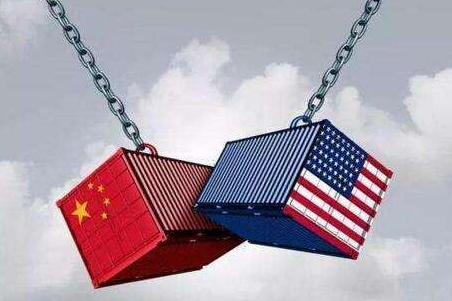
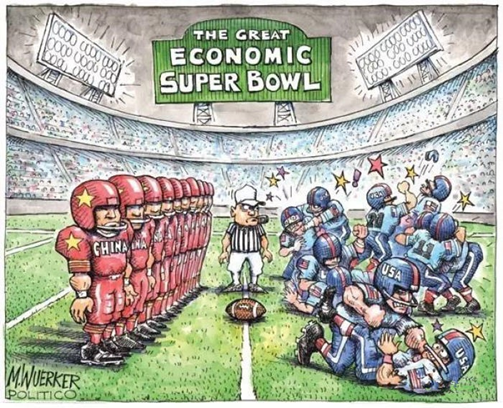
Heavy! Regarding Sino-US economic and trade frictions, China issued a white paper giving 13 authoritative conclusions.

        Heavy! Against the background that the US keeps escalating the Sino-US trade friction despite its opposition, the Press Office in the State Council, China today released a white paper entitled "Facts about Sino-US Trade Friction and China’s Position". This nearly 40,000-word document clarified the key facts in Sino-US economic and trade with detailed data and cases, strongly refuted a series of untenable arguments of the US government, and fully expounded China’s position and attitude. On Sino-US economic and trade frictions, the white paper puts forward 13 authoritative conclusions!

image.png

Conclusion 1. The "American Loss Theory" is untenable.

Since the establishment of diplomatic relations between China and the United States, bilateral economic and trade relations have continued to develop, and cooperation in trade and investment has achieved fruitful results, achieving complementary advantages and mutual benefit. China has benefited a lot from it, and the United States has also gained extensive and huge economic benefits from it, sharing the opportunities and achievements brought by the development of China.

On the whole, Sino-US economic and trade cooperation is a win-win relationship, not a zero-sum game. American enterprises and nationals have benefited from it, and the "American loss theory" claimed by some Americans is untenable.

Second, it is unfair to blame China for the imbalance of trade in goods between China and the United States.

The imbalance of trade in goods between China and the United States is more a natural result of the independent choice of the market under the American economic structure and the existing comparative advantage pattern. To solve this problem, both sides need to make joint efforts to carry out structural adjustment. It is unfair and unreasonable for the United States to ignore many factors that affect Sino-US economic and trade relations, unilaterally emphasize the imbalance of trade in goods between the two countries, and blame China.

Third, the so-called "fair trade" in the United States will cause a wider range of unfairness

The so-called "fair trade" emphasized by the current American government is not based on international rules, but on the premise of "American priority" and aims at safeguarding America’s own interests.

The "fair trade" and "reciprocal opening" advocated by the United States deny the objective differences in the development stages, resource endowments and advantageous industries of various countries, and ignore the development rights of developing countries, which will inevitably have an impact on the economies and industries of developing countries, resulting in a wider range of unfairness, and ultimately will not be conducive to American enterprises to expand the international market and share the development opportunities of developing countries.

04.png

The so-called "compulsory technology transfer" in China is a complete distortion of the facts.

Since China’s reform and opening-up, in order to expand emerging markets, save production expenses, realize economies of scale and extend the time of technology profit, foreign enterprises have taken the initiative to establish cooperative partnership with China enterprises, signed contracts and transferred their production capacity and orders to China, which is entirely a voluntary behavior of enterprises based on commercial interests. We should not distort the original voluntary trading activities of both parties into compulsory technology transfer because of the technological progress of enterprises in China, which is neither in line with historical facts nor a betrayal of the spirit of contract.

The U.S. government calls the voluntary cooperation of foreign-invested enterprises to establish partnership with China enterprises, transfer or license their technology and jointly obtain commercial returns in the China market "compulsory technology transfer", which is a complete distortion of the facts.

Conclusion 5. The accusation of the United States against intellectual property protection in China is contrary to the facts.

China has a clear and firm attitude towards the protection of intellectual property rights, and has continuously strengthened protection at the legislative, law enforcement and judicial levels, and achieved remarkable results. The recent accusation of the US government against China’s intellectual property protection is contrary to the facts, completely obliterating China’s great efforts and achievements in intellectual property protection.

Conclusion 6. China government’s support for enterprises to go global is not a government action to promote enterprises to acquire advanced technology from other countries through mergers and acquisitions.

Like other countries and regions in the world, China government supports powerful and qualified enterprises to invest abroad and expand the international market on the premise of observing the laws and regulations of the host country and international rules, and the government provides convenient services for enterprises’ foreign investment cooperation. The United States regards the China government’s support for enterprises to go abroad as a government action to promote enterprises to acquire advanced technology from other countries through mergers and acquisitions, which lacks factual basis.

image.png

Conclusion 7. There are a large number of investment and trade restrictions policies and behaviors in the United States.

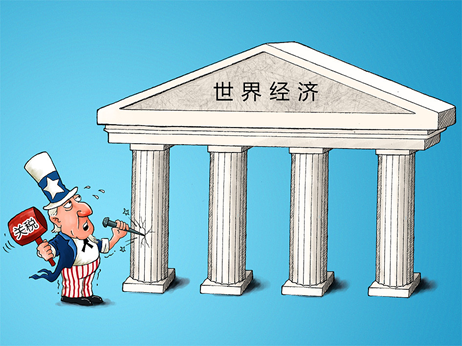
There are a large number of investment and trade restrictions policies and behaviors in the United States that distort market competition, hinder fair trade and split the global industrial chain, which are detrimental to the rule-based multilateral trading system and seriously affect the normal development of Sino-US economic and trade relations.

Conclusion 8. The international trade friction provoked by the United States will ultimately harm the long-term interests of the United States.

As the main founder and participant of the international economic order and multilateral trading system after World War II, the United States should take the lead in observing multilateral trade rules and properly handle trade frictions with other member countries through the dispute settlement mechanism under the framework of the World Trade Organization, which is also a clear commitment made by the US government to the international community. However, since taking office, the new American administration has unilaterally emphasized "American priority", pursued unilateralism and economic hegemonism, abandoned international commitments, and provoked international trade frictions in all directions, which not only harmed the interests of China and other countries, but also damaged the international image of the United States itself, shaken the foundation of the global multilateral trading system, and will ultimately harm the long-term interests of the United States.

Conclusion 9. The extreme trade protection measures taken by the United States hurt global economic and trade relations.

A series of extreme trade protection measures adopted by the US government have destroyed the international economic order, harmed global economic and trade relations including Sino-US economic and trade exchanges, impacted the global value chain and the international division of labor system, interfered with market expectations, and triggered violent shocks in international finance and commodity markets, which has become the biggest uncertain factor and risk source for global economic recovery.

image.png

Conclusion X. China is confident, determined and capable of coping with various risk challenges.

For the trade war, China is unwilling to fight, not afraid to fight, and has to fight if necessary. We have strong economic resilience and broad market space, the industrious and intelligent people of China, and the support of all countries in the world that oppose protectionism, unilateralism and hegemonism. We are confident, determined and capable of coping with various risk challenges. No external factor can prevent China from developing and growing.

The healthy and stable development of Sino-US economic and trade relations is expected by the international community.

Sino-US economic and trade frictions are related to global economic stability and prosperity, and to world peace and development, and should be properly resolved. Peace between China and the United States is beneficial, but fighting is harmful. It is in the fundamental interests of the two peoples and the common interests of the people of the world to maintain healthy and stable economic and trade relations between the two sides, which is expected by the international community.

Conclusion XII. The open door of China will not be closed, but will only grow wider and wider.

Reform and opening up is the basic national policy of China and the fundamental driving force for the development of China. The direction of China’s reform will not be reversed, but will continue to deepen. China’s open door will not be closed, but will only get wider and wider. China will continue to deepen reform and open wider to the outside world in accordance with the established deployment and pace, comprehensively promote the rule of law and build a socialist country ruled by law.

Conclusion XIII. China adheres to the general trend and the right path and unswervingly upholds the multilateral trading system.

If you get the word, you will get more help, but if you lose it, you will get less help. Faced with the international situation of increasing uncertainties, instability and insecurity, China Do not forget your initiative mind has always walked with the world, followed the general trend, upheld justice and followed the right path, unswervingly safeguarded the multilateral trading system, unswervingly promoted the reform of the global governance system, always been a builder of world peace, a contributor to global development and a defender of the international order, and unswervingly promoted the building of a community of human destiny.

(finishing: People’s Daily client Yue Xiaoqiao Zuo Xiao)

What’s wrong with the mobile phone charging? What should I do if the mobile phone can’t charge?

  Mobile phones are widely used in our lives, and the utilization rate of mobile phones is very high. Now we all use smart phones, which have more comprehensive functions and larger screens, but there are also problems, that is, smart phones consume more power. So we charge the mobile phone from time to time. When we are charging the mobile phone, it will happen that the mobile phone can’t be charged. What should we do after such a situation? What’s wrong with the mobile phone not charging?

  What’s wrong with the mobile phone charging? What should I do if the mobile phone can’t charge?

  1. The electrode contact of the battery is dirty, and the contact resistance is too large, resulting in too large voltage drop. When charging, the host computer thinks it is full and stops charging;

  2. The internal charging circuit of the mobile phone is out of order and cannot be charged normally.  

  3. If the battery can be charged, then there is a problem with the data cable or the phone socket. If not, then it’s the battery. If it’s a battery problem, Xiaobian has a small method. Wrap the battery in newspaper and put it in the refrigerator for three days, then take it out and put it in a ventilated place for a while, and then the battery will be fine.

  4. If there is something wrong with the phone jack, try to wipe the dust inside the interface with a brush or a small brush, or it may be caused by excessive dust accumulation in the interface. If it doesn’t work after wiping, it is recommended to change a socket or data cable. It may be caused by poor power contact.  

  5. Check whether there are foreign objects in the charging interface of the mobile phone, such as liquid inlet and sundries, which are caused by poor contact between the charging interface of the mobile phone and the charger. If this is the case, it is recommended to send it for repair as soon as possible. Back up mobile phone data (phone book, SMS, pictures, etc.) and restore the mobile phone to factory settings (enter mobile phone settings-reset-restore factory settings).

  6. Try not to answer the phone during charging. A good habit is to turn off the mobile phone when charging, so as to ensure high-quality charging effect. In the normal process of using the mobile phone, try to charge it healthily every time, that is, when the power is lower than 20%, and never wait until the power is exhausted to avoid affecting the service life of the mobile phone battery.  

  7. For users who use the voltage regulator converter to charge their mobile phones, they should connect the correct commercial power to charge according to the requirements in the charging instructions. Under normal circumstances, the domestic commercial power is 220V, while in foreign countries, such as Japan, the voltage is 110V V. Therefore, if you charge your mobile phone abroad, you will not be able to charge it normally due to insufficient voltage. Users who charge through the data cable should ensure that the normal 5V voltage is provided to the USB interface.

  8. The mobile phone can’t be charged. It may be that there is a problem with the quality of the battery itself. You can replace it with a new battery. Or the battery is damaged because it has been used for too long or because of the short circuit between the anode and cathode of the battery for some reason.  

  When our mobile phone can’t be charged, the first thing we have to do is to check the mobile phone charger to see if it is in good condition and if the data cable is not plugged in. In addition, the mobile phone can’t be charged with electricity, which may be due to the problems of the mobile phone itself. If there is something wrong with the mobile phone, then the only solution is to repair it or buy it again. No matter what the reason is, we can have corresponding solutions as long as it is based on the reason.

The fourth of "Four Questions about Bitcoin": How does the blockchain develop healthily?

Editor’s note: In May, the "currency circle" attracted countless attention. On May 18th, China Internet Finance Association and other three major associations issued an announcement pointing out that carrying out the exchange business between legal tender and virtual currency and between virtual currencies violated relevant laws and regulations and was suspected of committing a crime. On May 21st, the the State Council Financial Committee made a heavy voice, and once again clarified the strict supervision attitude of the financial regulatory authorities on Bitcoin: "Cracking down on bitcoin mining and trading, and resolutely preventing individual risks from being transmitted to the social field".
Where does the "fever" of speculative money come from? What is the chaos of "currency circle"? How does "mining" consume energy? How does the blockchain develop healthily? With these questions, People’s Daily’s "Strong Observation" column specially launched a series of reports on "Four Questions about Bitcoin", so please pay attention.
Recently, bitcoin has attracted the attention of the general public because of its sharp rise and fall and the strong supervision of the government. How to understand the relationship between virtual currency such as Bitcoin and blockchain? What role does blockchain play in helping the development of the real economy? What will China do to promote the healthy and orderly development of blockchain? In this regard, People’s Daily’s "Strong Observation" column invited many experts to interpret it.
Is bitcoin equivalent to blockchain?
"Actually, Bitcoin is a virtual currency." Zhao Xijun, a professor at the School of Finance and Finance of Renmin University of China, said that virtual currency is just like the points launched by some platforms to encourage players to use their own systems more. These points are just numbers rather than real money, but they can be traded in kind or transferred. "This number generated by the platform according to the rules has no fixed face value, and it is not the currency issued by the platform in advance. It can be understood as virtual currency."
When it comes to bitcoin, many people will mention blockchain, and some even think that bitcoin is a blockchain. Is bitcoin equivalent to blockchain?
"Bitcoin is by no means the same as a blockchain. The essence of blockchain is a decentralized distributed database. It is an innovative application mode of Internet with distributed data storage, multi-center point-to-point transmission and encryption algorithms, not virtual currency. " Long Fan, dean of the Blockchain Research Institute in Shutu District, said, "In short, the blockchain is actually a decentralized distributed database or account book that is difficult to tamper with, including public chain, private chain and alliance chain."
Regarding the relationship between Bitcoin and blockchain, Zhao Xijun believes that blockchain is the underlying technology of Bitcoin, and Bitcoin can exist and operate only by relying on the technical support provided by blockchain. The relationship between the two is more like attachment and being attached. However, the application of blockchain is not limited to the financial field, and its application is very extensive.
How does the blockchain help the real economy?
On October 24, 2019, during the 18th collective study in the Political Bureau of the Communist Party of China (CPC) Central Committee, General Secretary of the Supreme Leader stressed that it is necessary to promote the deep integration of blockchain and real economy, and solve the problems of financing loans for small and medium-sized enterprises, bank risk control and departmental supervision.
"Blockchain technology is related to value circulation, trust construction, contract observance and execution. It can play a key role in technical support for the construction of China’s real economy ecological environment, such as reducing transaction costs, improving product quality and credit, eliminating capital friction, building a benign supply chain relationship, and creating an innovative and ecological environment." Taking the manufacturing industry as an example, Zhu Wei, a member of the expert database of Beijing Science and Technology Commission, explained that both the market and policies and regulations are regulating the development environment of the manufacturing industry, but there is still room for the construction of industry order between them. "Blockchain plays a supporting role in building the industrial order of the manufacturing industry from a technical point of view, and can help the manufacturing industry to build a benign order of the industry quickly, spontaneously and purposefully."
Based on the technical characteristics of anti-counterfeiting, anti-tampering and traceability, Zhu Wei believes that this is conducive to solving the problems of equipment management, data sharing, multi-party trust and cooperation, and security in manufacturing, and plays an important role in improving industrial production efficiency, reducing costs, and improving the level and efficiency of supply chain coordination.
In addition, blockchain technology can promote the integration of industry and finance, so that finance can better promote the development of the real economy. Zhao Xijun said that the combination of blockchain technology and supply chain can greatly alleviate the problem of financing difficulties for SMEs in the supply chain; The tamper-proof blockchain and the security mechanism of private keys make identity management easier, and it is no longer necessary to rely on the supervision and credit of third parties, which greatly enhances the credibility of data networks; Distributed ledger technology makes non-commercial confidential data stored and backed up at all participating nodes, which solves the problem of information island in supply chain financial business.
In order to promote the deep integration of blockchain and real economy, Tian Shengdi, an associate professor at the School of Finance of Southwestern University of Finance and Economics, suggested: First, establish a provincial or even national supply chain tracking system, and establish a traceability and data integrity for the material flow related to national security, national economy and people’s livelihood. Reliable logistics system; Secondly, relevant departments should encourage industry cooperation, develop collaborative procurement and share supply chain management platforms, and create a highly visible upstream and downstream supply relationship through blockchain technology; Thirdly, enterprises should explore the application scenarios of blockchain and improve the application efficiency of technology, such as integrating information flow, replacing paper contracts and bills with blockchain, and integrating capital flow and using blockchain for account management.
How does the blockchain develop healthily and orderly?
In the chapter of "Accelerating Digital Development and Building Digital China" in the Outline of the Tenth Five-Year Plan, blockchain is listed as one of the seven key industries of digital economy in the Tenth Five-Year Plan.
Blockchain has been included in the five-year national development plan for the first time, and has become an important carrier for developing digital economy and building digital China, which indicates that the integrated application of blockchain technology will play an increasingly key role in the process of digital industrialization and industrial digitalization.
In this regard, Pan Helin, Executive Dean of the Digital Economy Research Institute of Zhongnan University of Economics and Law, said that although virtual currency has ushered in strong supervision in China, with the support of a series of policies, blockchain is likely to become an important new infrastructure in the digital economy era. It is of great significance to the development of the real economy, modern finance, and scientific and technological innovation. Nowadays, all countries are vigorously developing.
In addition to the benefits, the blockchain also poses new challenges in terms of supervision. A blockchain research expert from the central bank explained that financial behaviors such as virtual currency exchange, ICO (initial token issuance) fund-raising and pyramid selling in the form of tokens are frequent, and the current regulatory technology needs to monitor and analyze the public chain address and transaction data of the above behaviors to judge whether it is illegal or not. However, the public chain based on blockchain technology is anonymous, and the intelligent contract has the characteristics of unmanned automatic execution, which makes it impossible for the current regulatory technology to carry out detection and analysis, and naturally it is impossible to complete the judgment of illegal and criminal acts.
Some illegal blockchain applications use the names of points, stored value, equity, bills of lading, sales incentives, coupons, etc. to implement illegal financial behaviors such as fund-raising and pyramid schemes. "In addition to technical supervision, there should also be laws and regulations, but laws and regulations in this area are still missing." The expert added that it is not clear how to adapt and be compatible with the existing regulatory processes even for the legitimate blockchain applications such as supply chain finance, compliant asset registration and trading, and deposit certificates, and it is necessary for the regulatory authorities to formulate refined and operational standards and norms.
In order to solve the above problems, the expert suggested to build a unified data supervision and analysis platform for virtual currency finance based on blockchain technology, which can not only analyze, predict and judge financial risks by combining bank transaction data, but also improve the analysis ability by applying big data, joint risk control based on privacy computing, knowledge map, artificial intelligence and other technologies. At the same time, for violations in the name of blockchain instead of blockchain technology, supervision should be strengthened to increase illegal costs.
One of the "Four Questions about Bitcoin": Why does supervision follow one after another? How big is the risk of speculation?
The second question of "Four Questions about Bitcoin": "Mining", how much energy does it consume?
The third of "Four Questions about Bitcoin": How much do you know about the chaos of "currency circle"?
Reporting/feedback

TOP7, an American shopping website that is cheap and easy to send directly to China.

   Lead: Most people shop overseas mainly to buy things that are cheaper than those in China, or some people want to buy some products or brands that they like but have not been sold in China, so everyone will consider a lot in the process of buying.

  Such as: freight, return and exchange procedures, customs duties, customer service and customs duties, etc., many foreign shopping malls are also very mature, which dazzles you. However, because many merchants do not support direct shipping to China, or some even do not support international credit cards, it is still a bit difficult to find cheap and easy goods conveniently and simply. Now let Xiaobian recommend several websites for everyone.

TOP7, an American shopping website sent directly to China.

  Here is a B2C mall. They either ship directly to China in a very economical way or even free of charge, or support China’s credit cards, and they all have their own characteristics.

  1.shopbop

  2. Revolve Clothing

  3. Zappos

  4. ASOS

  5. Benefit

  6. SkinStore

  7. Amazon

  1. shopbop(www.shopbop.com)

TOP7, an American shopping website sent directly to China.

  Optimal recommendation of SHOPBOP direct delivery discount products

  Amazon bought this website in 2006, which specializes in selling designer products (women’s fashion goods). When buying luxury goods at civilian prices, it can enjoy a maximum discount of 70%. For orders smaller than 100SD, the unified freight is 10USD (excluding customs duties and import taxes). For orders larger than 100SD, it is free of freight worldwide and shipped directly to China. You can use USPS through ShopBop Global (which collects customs duties and import value-added tax), UPS(100USD automatic customs declaration) or USPS. Although you can’t track your order and it takes a long time to deliver it, it is less likely to be taxed because it belongs to civil parcels.

  There are 75 brands and designers’ products on the website, and some of them are sold exclusively, and the prices are very civilian. If you pay attention to their discount shopping areas, you may get unexpected gains.

  Highlight: With Amazon as the backing, affordable prices, a wide variety of goods, and a more humane and economical shipping method, it is understandable to rank it in the first place.

  For more information about purchasing, you can refer to it here, and you can also learn more about the precautions about purchasing and returning goods in the Customer Service area of their website.

  2. Revolve Clothing(www.revolveclothing.com)

Revolve Clothing

  Like ShopBop, it is also an American website selling fashion designer brands. There are both men’s and women’s clothes, and there are more brands than ShopBop. There are more than 200 designer brands, big brands and small brands. Like ShopBop, you can enjoy USPS (no tracking) free shipping to China when you buy more than 100SD, and the shipping fee for orders less than 100SD is 10USD. You can also request delivery by USPS Express (providing waybill tracking). Orders larger than 100USD will be charged 8USD, and orders smaller than 100USD will be charged 18USD. Free return within 30 days (return freight is required for international orders).

  Highlight: Affordable prices, a wide variety of goods, and humanized delivery and return methods are not inferior to or better than ShopBop in all aspects except for the lack of such strong backing as Amazon in the brand.

  For more information about purchasing, you can refer to it here, and you can also learn more about the precautions about purchasing and returning goods in the Customer Service area of their website.

  3. Zappos ( www.zappos.com )

Zappos

  This is a Chinese-founded company. At first, it was a website specializing in selling shoes, and it was also the largest online shoe store in the United States. They also owned another thank-you website (www.6pm.com). In July 2009, this company and its www.6pm.com were acquired by Amazon. At present, www.zappos.com not only sells shoes, but also sells many other fashionable goods such as clothes, handbags, watches and some other decorations. The designer brand is also complete. At present, there is also a special area (http://couture.zappos.com) selling designer fashion brands. The brands are complete, and you can see many designer brands.

  The biggest feature of their website is the 365-day free return, which is free of domestic freight in the United States. However, it does not support international shipping for the time being, and it can be paid through PayPal, and it also supports international credit cards. Sometimes, many famous brand shoes can be bought at a very low price.

  Recommended reasons: the largest online shoe store in the United States, Amazon’s strong backing and worry-free 365-day return method, support for international credit cards and free shipping in the United States, and the gathering of big names in fashion areas are all recommended reasons. The only drawback is that it does not support international shipping.

  For more information about purchasing, you can refer to it here, and you can also learn more about the precautions about purchasing and returning goods in the Customer Service area of their website.

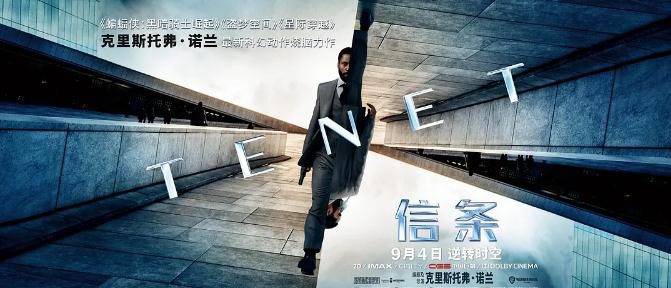
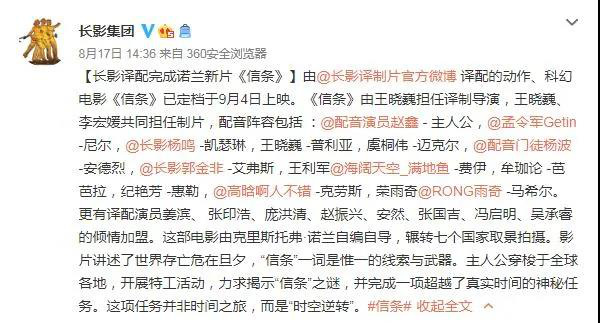
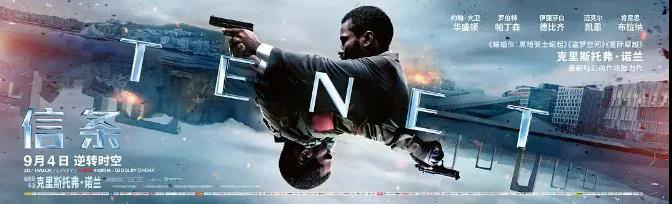
Tenet also has a national version, and the original translated film can be opened like this


Special feature of 1905 film network  The information is too dense to understand? The second brush can consider the national version! Many viewers said in Weibo that Ershua hopes to choose.Mandarin dubbing version, by"Without the trouble of reading subtitles, you can focus on the plot and solving puzzles."


The dubbed version of Tenet Mandarin was translated by Changchun Film Studio, directed by Wang Xiaowei, and voiced by Zhao Xin, Meng Lingjun and Yang Ming respectively.


When it comes to translated films, most of us will recall the golden age of 1970s and 1980s. Zhang Yukun, Tong Zirong, Bi Ke, Liu Guangning, Xiang Juanshu and other voice actors of the older generation interpreted countless classic lines and roles, which constituted a common memory of the times for a generation.


Nowadays, with the change of the younger generation’s viewing habits, is the translated film no longer beautiful? How to make young audiences truly feel the charm of film dubbing art?


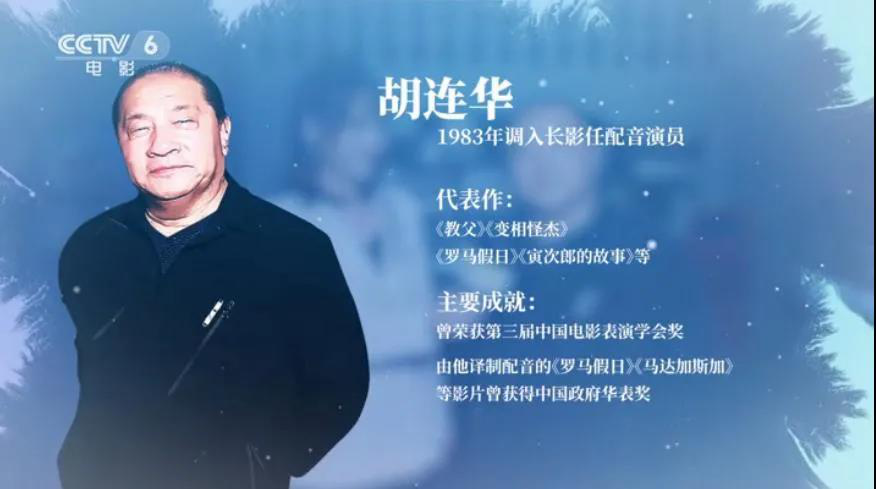
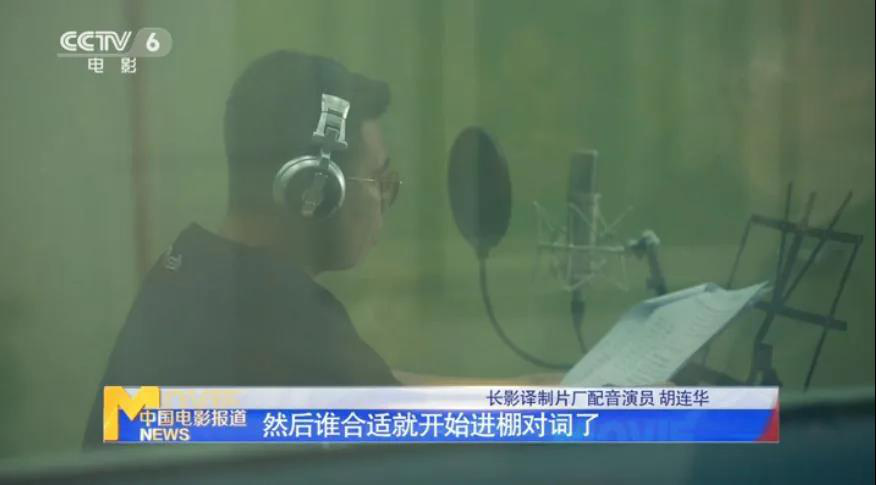
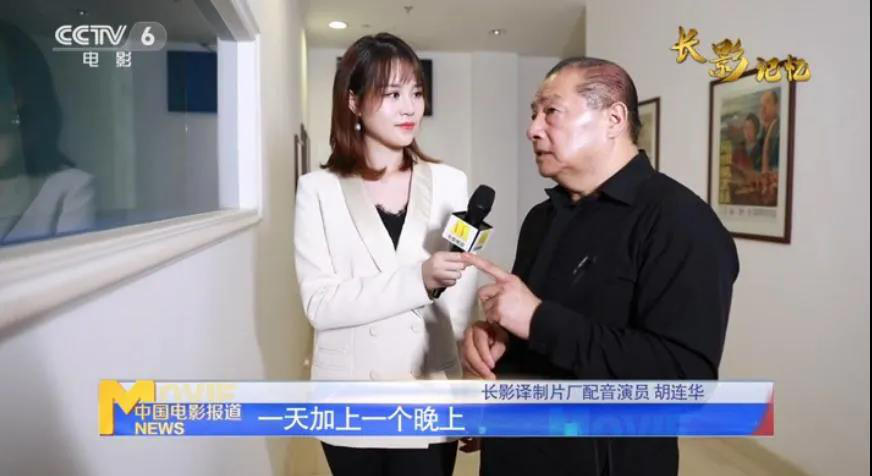
During the 15th Changchun Film Festival·China, we also made a special trip to Changying Translation Studio to get a close look at the charm of film translation under the leadership of the director Wang Xiaowei and the famous voice actor Lianhua Hu.


From Part One to Part 2666

Classics and inheritance of translated films


Entering the exhibition hall of Changchun Film Translation Studio, the shining number "2666" on the wall is particularly eye-catching.


As the birthplace of film translation in New China, Changying Translation Studio has translated 2,666 films from 50 countries since 1949.


Among them, there are not only Ordinary Soldier, the first translated film of New China, but also classic films such as Francis.


In recent years, the translation and distribution of Hollywood blockbusters such as Tenet are also produced by Changying Studio.


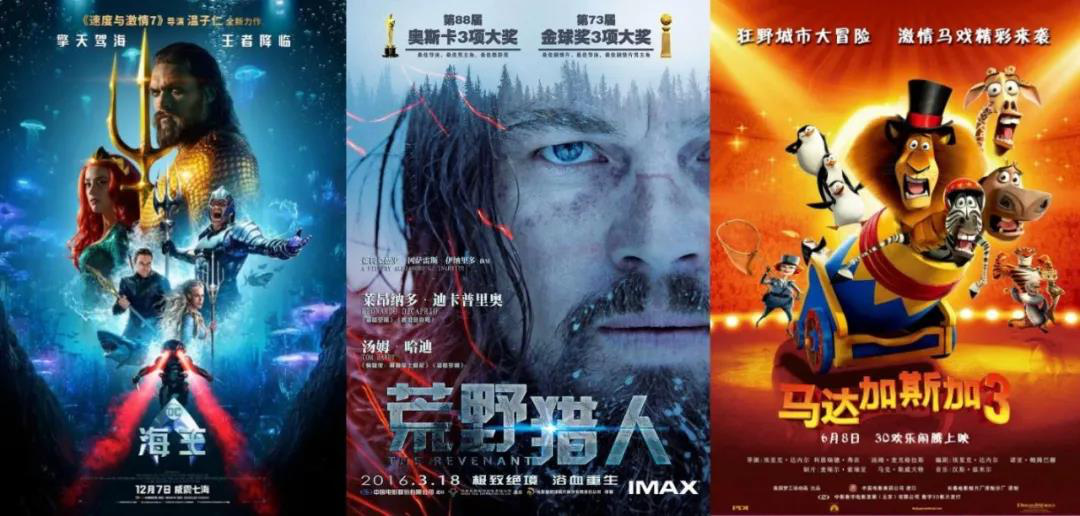
Lianhua Hu, a well-known voice actor, joined Changying Translation Studio in 1983 and has dubbed more than 1,100 films so far, including Roman Holiday, The Grinch in disguise and other classic works, which witnessed the golden age, development and inheritance of translated films.


Talking about the behind-the-scenes stories of the old translators such as Ordinary Soldier, what impressed Lianhua Hu most was the rigorousness, hard work and plain living professionalism of the voice actors of the older generation.


Because flammable film was used at that time, it was possible to catch fire after dubbing for more than three times, which also put forward extremely high requirements for actors: they must "recite their lines backwards" without a word or a mouth shape.


Before the official dubbing, actors have to recite words, write personal feelings, analyze roles, polish them for months or even half a year, and some even take bedrolls and live directly in the dubbing shed.


Zhang Yukun, the late famous voice artist who once voiced the leading actor of Ordinary Soldier, once recalled, "I read the lines to the original film over and over again. But I can’t be right. I’m so anxious in winter that I’m sweating. The more anxious I am, the more wrong I am. After repeated attempts, I finally found some tips. "


Most of the older generation of voice actors have no professional foundation, but without exception, they all have the spirit of being willing to endure hardships and study hard, and have explored the doorway of voice-over step by step.


"This is also a revolutionary tradition passed down from generation to generation. Seventy-five years ago, a group of people dressed in homespun uniforms walked from Yan ‘an in northern Shaanxi for more than four months to meet in Changchun, Jilin, to build changchun film studio. This spirit of hard work and simplicity has been adhered to and passed down by Changying Factory. " Lianhua Hu said.


Nowadays, many imported films leave very little time for translation work in order to catch up with the schedule, but Changying has always continued the fine tradition of the film era, and will still organize everyone to watch movies together, analyze roles, try to figure out emotions, and do their homework before dubbing.


Wang Xiaowei, director of Changying Translation Factory, said that the dubbing work of translation producers often needs to work overtime, but no matter whether the actors are old or young, they have no complaints.


"It is common for them to stay in the shed for several hours, ten hours or so. It seems that their life is just in a small room, facing a microphone, but they completely integrate themselves into the film and feel the charm of light, shadow and sound. Macroscopically speaking, this is a career, and microscopically speaking, this is a career. "


Break the stereotype

How to break through the translation?


On the one hand, the dedication and persistence of voice actors, on the other hand, it is an indisputable fact that the market of Chinese-made translation films is shrinking.


In Tenet, for example, there are only 13 cinemas in Beijing showing dubbed versions of Mandarin, most of which are located in suburbs or are not popular cinemas in business districts. This is also the general situation of Chinese-translated films.


On the one hand, the prosperity of subtitle groups has made the younger generation have already developed the habit of listening to the original sound and watching subtitles. Many young viewers believe that the original sound version is more original.


In recent years, a series of "translated tunes" represented by "my old buddy", "you damn it" and "Oh, my God" are often compiled into paragraphs and become the object of netizens’ spit, which also makes many viewers stereotype the "translated films".


In this regard, Lianhua Hu said that in today’s translation work, the first thing is to keep pace with the times and get rid of the "dubbing cavity". "We should use a more grounded language expression, because the film itself is a cultural commodity, and only when we share the same fate with the current audience can we have room for survival."


On the other hand, due to the rush of importing films, the time left for dubbing is often very limited. Time is tight, and the task has become the normal work of this industry.


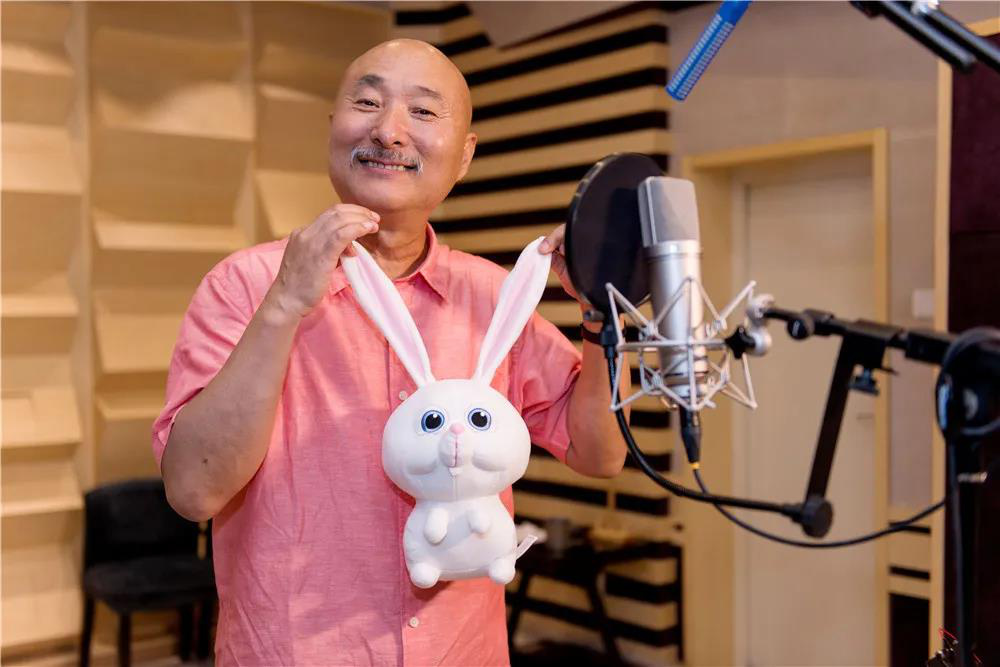
When dubbing, Peisi Chen once "complained" that the "White Rabbit" was recorded for only one day, lacking sufficient preparation time, and he was "too old to keep up with the strength behind".


Cao Lei, a famous voice actor who participated in the dubbing, also said at the press conference that the dubbing time was relatively hasty, and he had never seen the whole English film, only the fragments of this role.


According to Wang Xiaowei, many Hollywood blockbusters have only a week to 15 days left for translation. After translation, the dubbing director has to "agree", lip-synch a little and adjust his lines. The time really left for voice actors is often only 10 hours.


"At first, everyone didn’t adapt, and felt that time was too short to be finely polished, but we are constantly adjusting our mentality to adapt to this concept of time." Wang Xiaowei said.


In addition, the script and translation level are also important factors affecting the quality of translated films.


Jia Xiuyan, who has translated Hollywood blockbusters, once quoted a famous translator Fu Lei as saying: "Translation is like painting" and thought that "a good translation should be like copying a painting, and the pursuit is not in the form, but in the spirit."


However, at present, film translation is more at the level of "similarity", and it can only be as accurate as possible, but it is still slightly inferior in language color and artistry. Palace-level translation, which can be compared with Mr. Sun Daolin’s classic dubbing clips in his early years, is hard to find.


Happily, in recent years, many high-quality Chinese films have emerged. In the creation of DreamWorks, it is the first time that DreamWorks attempts to remake the mouth shape for foreign language countries and tailor-made dubbing versions.


Not only did we set up a Chinese dubbing team including screenwriter, director and creative consultant, but it also took eight months to polish the localized script and adjust the mouth shape, and finally received good feedback from the audience.


The Chinese-American co-production animation released last year not only showed the scenery of China to the world and told the story of China, but also invited Zifeng Zhang, Chen Feiyu, Wan Qian and Cai Ming to form an all-star dubbing lineup, which was well received.


The dubbed version of Mandarin Chinese has landed in 4,000 cinemas in the United States, delivering the original "China voice" to the world.


Wang Xiaowei said that the future development of Changying Translation Studio will be "multi-legged", not only to do a good job in the translation and distribution of cinema films, but also to continue to maintain cooperation with film channels, and at the same time actively try to dub TV dramas, cartoons and even radio dramas. "I want to turn them into a team that is versatile in all kinds of works, so as to have better development."


In recent years, with the rise of Guoman, the popularity of dubbing programs and the popularity of dubbing software, many dubbing actors have also gone from behind the scenes to "in front of the stage", which has won more attention and respect for the whole industry while gaining fans and applause.


In Japan and Europe, where the film market is highly developed, a large proportion of dubbed films are still released every year, and excellent dubbing actors and seiyuu also have excellent income and high social status, which proves that translated films, as an art form of "re-creation", have their value and significance and will not die out with time.


Polishing the works with meticulous creative attitude, so that the dubbed version can display the unique charm of China language, will definitely make more audiences regain their love for the translated films.


Summary of National Football Asian Cup: One goal is not scored, and one win is hard to find. Has China football reached its lowest point?

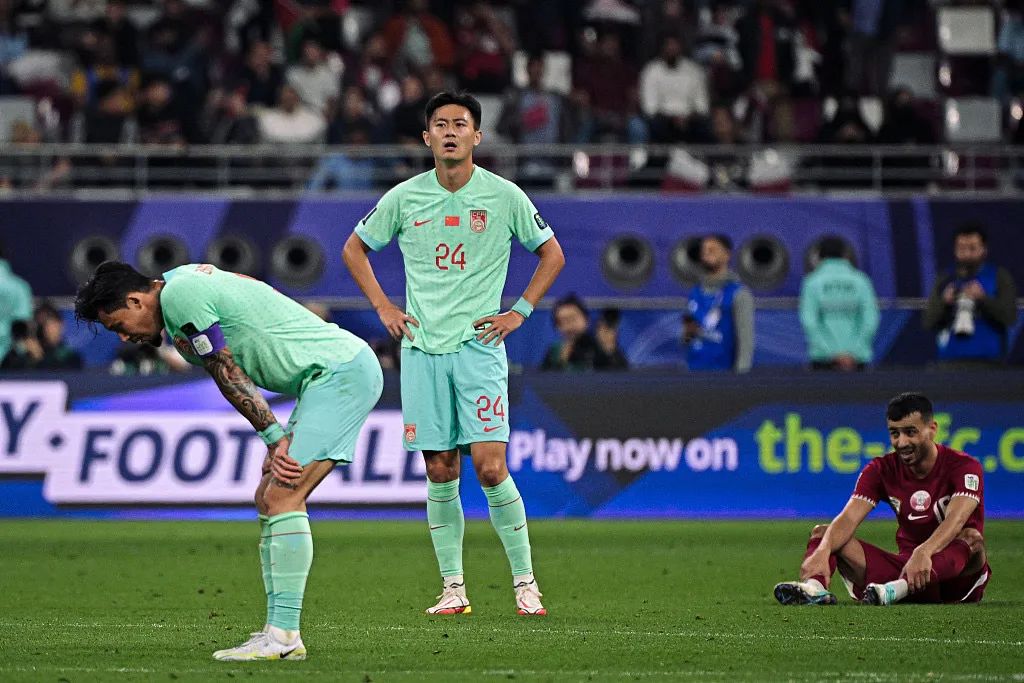
  With Hellbing helping Syria score a goal against India, China’s trip to the Asian Cup officially came to an end. Ranked third in a group that is not strong in overall strength, and third in the group with the worst performance among the six groups, China team has faded out of the top 16 in Asia.

  The Asian Cup is just a microcosm. In recent years, China’s national teams of all ages have been absent from various world competitions and are struggling in Asian competitions. In the upcoming U23 Asian Cup and Olympic qualifiers, China was even placed in the fourth team.We have to admit that the China men’s soccer team has now become a third-rate team in Asia.

  Look at the present: the building has fallen from bad to worse.

  In three group matches, two draws and one loss, one goal failed, and the group was third out, setting a new record for the national football team to participate in the Asian Cup.In this Asian Cup, the problems began to appear from the first match against Tajikistan. In jankovic’s tactics, offense and defense are two different positions. Such tactics are not uncommon in today’s football world, but such real-time position switching requires players’ certain tactical literacy and athletic ability as a guarantee. But it turns out that in today’s China team, many people don’t have this ability.The accuracy of passing the ball is not enough, and the change of ball rights is constantly appearing, which makes this formation change more frequent, which makes the players with insufficient ability more and more exhausted. The loss of power in midfield and the loopholes in defense are the direct results of the mismatch between tactics and players’ abilities.

  Jankovic tried to solve the problem by changing the array. In the match against Lebanon, jankovic first introduced the 532 formation. But at the beginning of the big list, it seems that it was not selected according to the formation of the five defenders. Such a temporary change is tantamount to robbing Peter to pay Paul, which makes up for the original loopholes to some extent, but it also brings new problems, which is not conducive to the players to play their best level on the court.

  In the first 45 minutes of the final round against Qatar, the national football team played the best half game of this Asian Cup, but still failed to score. This inevitably reminds people of the last round of the Asian World Cup qualifiers in 2017. In the case of last stand, Qatar, which had no pressure and sent a large number of non-main players, took the lead in the first half but lacked the skills to score.

  But the difference is that Qatar at that time was a team that failed to qualify at the bottom of the group and even had few home audiences. Now they have transformed themselves into defending champions who qualified early. The identity change between China and Qatar is also a microcosm of the overall development of Asian football in recent years. As Wei Shihao said after the third game,China’s men’s soccer team has fallen behind in all directions, Asian teams are making progress, and we are standing still.

  Recalling the past: Rome wasn’t built in a day.

  Looking at the top scorer list of the Super League in 2023, there are only two domestic players, Lei Wu and Tan Long, and only Wang Ziming and Daniel F. Akerson are in the top 20, and the rest are occupied by foreign aid.Over the years, many domestic players have formed the habit of giving the ball to foreign aid in the middle and front court to solve the problem.Once this dependence is formed, over time, they also lose their sense of smell for finding flaws and their spirit of attacking the city and pulling out the village.

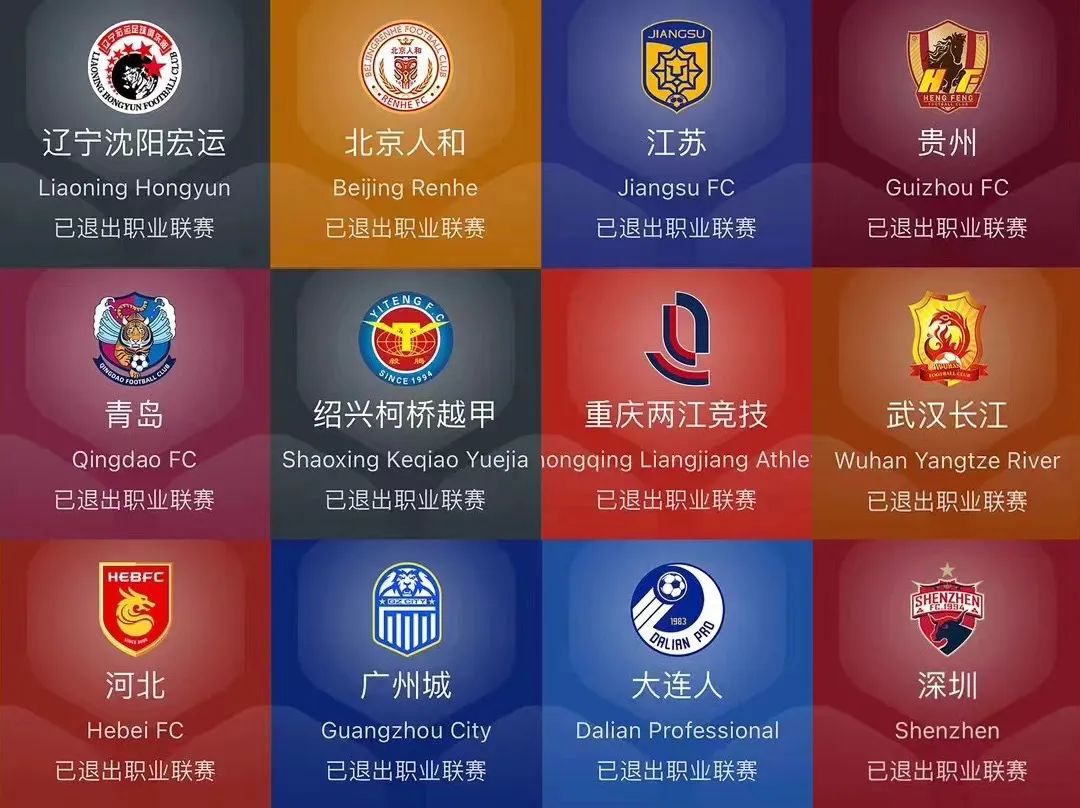
  A few years ago, the Super League and even China A introduced strong foreign aid crazily, and the ball market was hot. The Guangzhou team also won two AFC Champions trophies.However, the false prosperity of football manufacturing in Jinyuan is not sustainable after all. In recent seasons, we have witnessed the demise of one old club after another.And these bubbles are reflected in the national team level, that is, the World Cup, the Asian Cup and other major competitions, without exception, do not end in disappointing results.

  This is just the tip of the iceberg of the problems existing in the development of China football over the years. According to industry insiders,China’s football development plan has long been out of touch with international advanced concepts, and this disconnection has even lasted for 20 years.For example, the selection, training and competition of high-level players, etc., only when these contents are carried out in the case of high confrontation can ensure that players can adapt to the high-level game rhythm in major events.

  It’s not that the Football Association didn’t learn advanced cases in the past, but it only learned the surface and the fur. For example, the implementation of the U23 policy is nothing more than driving ducks to the shelves and pushing players who are not capable of competing on such a stage to the stadium, which has created one joke after another with extremely short playing time. Correspondingly,The average age of the national football team is in this Asian Cup.24Ranked the second highest among the participating teams.There are old faces on the court, but few future stars and fresh blood.

  It’s not that the Football Association hasn’t tried to remedy it, but it’s a temporary solution rather than a permanent cure. At the end of 2018, the national football team set off a wave of naturalization, but five years later, among this group of naturalized players, only Jiang Guangtai participated in this Asian Cup. Besides, there are only a handful of people who are still active in China football. They are destined to be passers-by in China’s football history. They came in a hurry and left in a hurry, but failed to lead the national football team to the World Cup or kill the quartet in the Asian Cup as expected.

  After all,The meaning of domestication itself is to complete the puzzle, or to add icing on the cake, rather than taking them as the framework and cornerstone, otherwise it will be putting the cart before the horse.Naturally, we should not hope that the appearance of these naturalized players will make the national football team completely turn over.

  As early as 2015, at the 10th meeting of the Central Leading Group for Comprehensively Deepening Reform, the Overall Plan for Football Reform and Development in China (hereinafter referred to as the "Plan") was reviewed and approved. It puts forward a "three-step strategy" for the development of football in China, that is, the short-term goal of "straightening out the football management system, formulating the medium-and long-term development plan of football and innovating the football management model with China characteristics", and the medium-term goal of "realizing a substantial increase in the youth football population, reaching the first-class level in Asia in the organization and competition of professional leagues, leading the national men’s soccer team in Asia, and returning the women’s soccer team to the ranks of the world’s top teams", and "enabling China to successfully bid for the World Cup, and the men’s soccer

  But nearly nine years later, we are getting farther and farther away from this goal. In this regard,China Football Association has an unshirkable responsibility. Over the years, the overall design of China Football Association has been problematic from the top of the pyramid.,The separation of management and operation required by the "Program" has not been implemented.Some "moths" are even more selfish, ruthlessly trampling on the efforts of countless footballers day and night. Nowadays, the competitiveness of the league is declining, the clubs are tottering, and there is no successor to the national team … … All this is the result of years of accumulated evil.

  Seek the future: the past is not admonished, and the future can be pursued.

  The emergence of every football giant is not made out of nothing and achieved overnight, but has a process from zero to one and from weak to strong. What is done is done, and what happened in the past cannot be changed; But there are still countless possibilities for China football in the future.

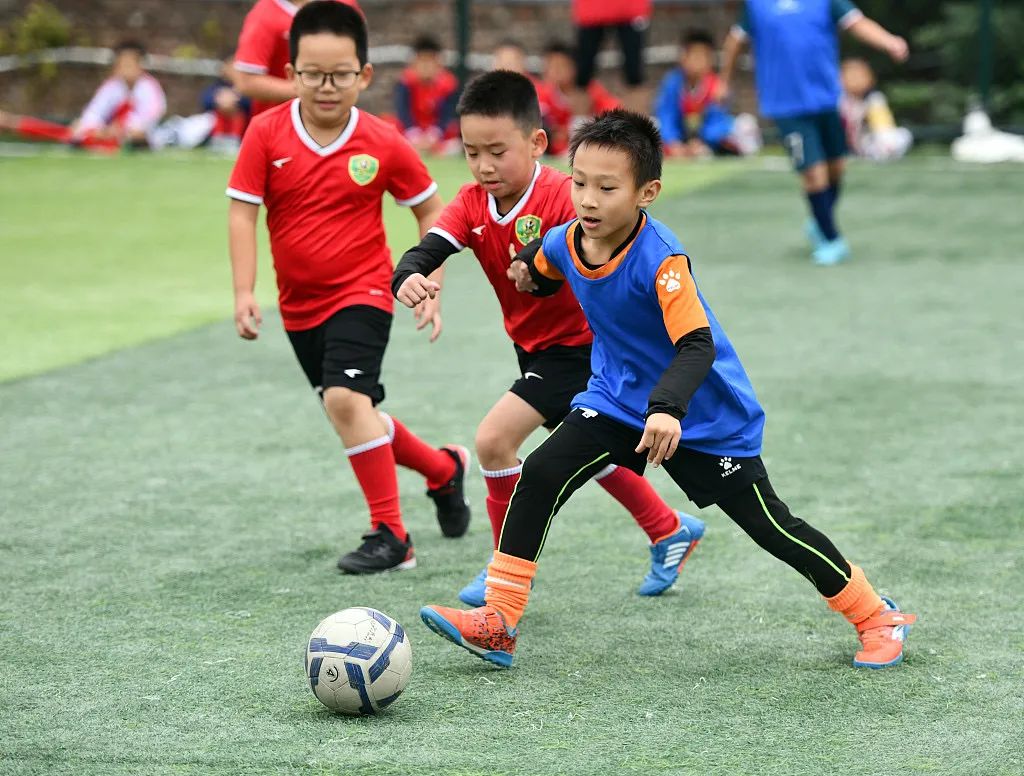
  If we want to develop healthily for a long time, we should rely on our own hematopoietic capacity.Youth training may be the only way out.The "Program" included football in the teaching content of physical education class in primary and secondary schools around the country, and the proportion of class hours increased.But until today, China’s "integration of sports and education" has failed to find that balance point, and the ideal "equal emphasis on learning and training" will inevitably lead to a "learning and training dilemma".

  Today, our countrytwelveThere are quite a few football people under the age of 18, but many children are under the pressure of further studies.twelveAway from football at the age of 18.Even then they had made their mark on the pitch.How to make more children appear on the football field more permanently is an urgent problem to be solved in the integration of sports and education.

  The appearance of every star is accidental, and it is by no means accidental. They are born with extraordinary talents, or they are successful step by step, but all of them are under a sound system, Bole’s discerning eyes know pearls, or the waves of the years wash sand. It is an inevitable process that quantitative change leads to qualitative change. No one can be destined to become a star at the age of 12, but "retiring at the age of 12" is doomed to be a star.

  To change, we must start from youth training and start from the grassroots.Those grass-roots football seems to be far away from the profession and the national team, but this is the foundation for the survival and development of a national football. Only by truly sinking the focus of football development from the top league to the grass roots, exploring the football system suitable for our country, and establishing the path from school to club, from youth training to occupation, can China football develop continuously and gradually move towards a bright future.

  At present, the first task is to make fundamental changes. All changes have painful periods,Some insiders believe that,The lowest point of China football may be in the future, so we should be prepared that it will be difficult for the national team to achieve excellent results for a long time to come.What China football needs now is to consolidate the foundation of the "football pyramid" seriously, to adjust its direction, to persist in the right path, not to toss about, not to be eager for quick success, to follow the objective laws of football and to move forward steadily.

Rushan Public Security, Shandong Province: Two "non-visiting" personnel were detained by administrative authorities for leapfrog visits.

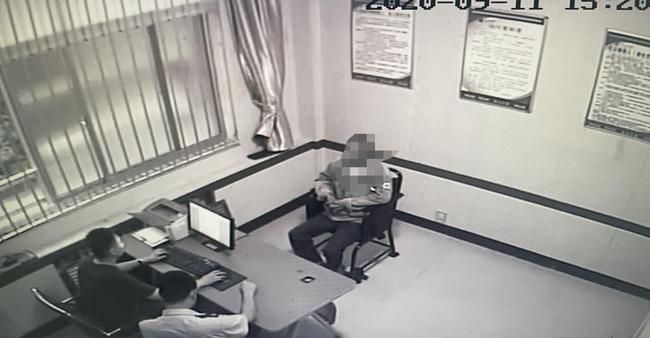
Rushan posted a WeChat report in WeChat official account on October 25th. Recently, the Public Security Bureau of Rushan City cracked down on two "non-visiting" personnel according to law, and detained Duan and Song Mouqi who were suspected of provoking troubles according to law.

Duan, male, from a village in the sub-district office of Rushan City, has visited Jinan and Beijing several times since April 2019. After being admonished by the public security organs, Duan did not think about repentance. On September 9, 2020, he went to Beijing to visit again. On September 15th, Rushan City Public Security Bureau punished Duan for administrative detention for 10 days for seeking trouble.

Song Mouqi, male, from a village in the urban sub-district office of Rushan City, has visited Jinan and Beijing several times since June 2018. After being admonished by the public security organs, Song Mouqi did not think about repentance. On September 2, 2020, he went to Beijing to visit again. On September 15th, Rushan City Public Security Bureau punished Song Mouqi with 10 days’ administrative detention for seeking trouble.

In the above cases, Duan Mou and Song Mouqi did not petition normally according to the petition procedures and regulations allowed by the state, but wantonly disturbed the office order of the party and government organs, damaged the social security order, and caused extremely bad social impact, and they will certainly pay the legal price for their irrational behavior!

The family has its own rules and state-owned laws. No rules, no Fiona Fang. It is not that the state does not allow petitions to reflect problems, but should reflect them step by step and petition according to law. Do not abide by the order of state letters and visits, and take deliberate, radical and explicitly prohibited ways by laws and regulations, such as collective visits, noisy visits, pestering visits and leapfrog visits. These acts are illegal in themselves and will be subject to administrative punishment or criminal responsibility.

The central government proposed to comprehensively promote the process of governing the country according to law, make the society more orderly, and let the sunshine of legality, fairness and justice shine on the land of China. Problems left over from history must also be solved according to law and handled according to the rules. No one or organization can solve unreasonable demands that violate national laws and regulations. At present, illegal letters and visits are mainly manifested in the following forms:

Leapfrog visit

One or more people visit multiple petition reception places on the same petition matter, and do not choose representatives according to the provisions of the Regulations on Letters and Visits, and do not listen to the dissuasion, criticism and education of state organs. In this regard, the public security organ will give a warning, admonish or stop it; Those who disturb the order of the unit or gather people to disturb the order of the unit will be detained administratively, and in severe cases, they will be detained criminally.

Repeated visit

Failing to make a complaint request through legal channels, not requesting the recheck of letters and visits in accordance with legal procedures, or making a complaint request with the same facts and reasons after the complaint request has been resolved according to law, and repeatedly pestering the visitors at the reception place for letters and visits. In this regard, the public security organ shall give a warning, admonish or stop it, and if the circumstances are serious, it shall be punished by disturbing the order of the unit.

Trouble visit

Stay in the reception place for letters and visits, make trouble, or abandon those who are old, young, weak, suffering from serious diseases, physical disabilities and other people who can’t take care of themselves in the reception place for letters and visits. If the staff of the relevant state organs dissuade, criticize and educate them, the public security organs will warn, admonish or stop them, and punish them for disturbing the order of the unit.

Make a fuss about visiting

Placing wreaths, urns, portraits, sacrifices, burning Mingbi, or parking corpses in the reception places for letters and visits. In this regard, the public security organs will be punished for disturbing the order of the unit and illegally parking the body.

Incite a visit

Inciting, colluding, coercing and inducing others to express their demands in a radical way, disrupting the order of letters and visits, and punishing behind-the-scenes manipulation with disturbing the order of the unit and gathering people to disturb the order of the unit.

Endangering public safety visit

In order to create social influence, vent dissatisfaction and realize personal demands, those who drive a motor vehicle in public places at will and endanger public safety will be investigated for criminal responsibility for the crime of endangering public safety in a dangerous way.

Obstruct traffic order visit

On the grounds of submitting petition materials and reflecting problems, illegally intercepting, forcibly boarding, taking a motor vehicle or other means of transportation, or throwing petition materials when taking a vehicle, affecting the normal driving of the vehicle and obstructing the normal driving of the vehicle, the public security punishment shall be imposed.

Illegally carrying dangerous goods to visit

Those who illegally carry guns, ammunition, crossbows, daggers and other controlled devices, or explosive, toxic, radioactive, corrosive and other dangerous substances in reception places for letters and visits, other state organs or public places and public transport will be investigated for administrative or criminal responsibility.

Self-mutilation visit

Self-injury, self-injury or suicide by arson, explosion or other dangerous methods, endangering public safety. The public security organs will investigate criminal responsibility for arson, explosion and endangering public security.

Hurt others to visit

Beating others or intentionally hurting others’ bodies, or knowingly suffering from AIDS or other serious infectious diseases, intentionally hurting others by biting or scratching, etc., will be investigated for criminal responsibility.

Frame someone to visit.

Whoever fabricates or distorts facts, falsely accuses and frames others, and attempts to subject others to criminal investigation or public security administration punishment violates the Public Security Administration Punishment Law or the Criminal Law. Those who are light are detained for several days, and those who are serious are investigated for criminal responsibility.

Blackmail interview

Whoever violates the Criminal Law by creating social influence, making extreme visits, constantly pestering and making visits, etc., will be investigated for criminal responsibility.

Demonstration visit

Sitting around the office of state organs, posting and distributing materials, shouting slogans, playing banners, wearing clothes, showing papers, threatening self-injury, self-injury, suicide and other acts or illegal gathering, the public security organs will give warnings, admonish or stop them, ranging from administrative detention to criminal responsibility.

Vent a visit in a public place

Posting and distributing materials, shouting slogans, playing banners, wearing formal clothes and presenting formal papers, or illegally gathering in public places such as stations, docks, shopping malls, parks and squares, and committing the above-mentioned acts around venues, activity areas or venues during the holding of large-scale mass activities such as culture and sports, or during major domestic and international conferences. Those who are light will be detained in public order, and those who are serious will be investigated for criminal responsibility.

Disgrace visit in national key areas

Those who engage in sit-ins, post and distribute materials, shout slogans, put up banners, wear fancy clothes, show fancy papers, etc. or illegally gather in the places where foreign embassies and consulates or international organizations are located in China shall be punished for public security management according to law in order to disturb the order of public places and gather people to disturb the order of public places, and in severe cases, criminal responsibility shall be investigated for the crime of gathering people to disturb social order.

Create a bad influence interview

Those who jump into a river, jump off a building, jump off a bridge, climb buildings, iron towers, chimneys, trees, or engage in other acts of self-injury, self-mutilation or suicide, thus causing social impact, shall be punished for public security management according to law in order to disturb the order of the unit and the order of public places. In the worst case, they shall be investigated for criminal responsibility on suspicion of gathering people to disturb the order of public places.

Obstruct an official visit

Obstructing the staff of state organs from performing their duties according to law, forcibly breaking into warning tape and warning zones set up by public security organs, or obstructing the passage of vehicles such as fire engines, ambulances, engineering rescue vehicles and police cars performing urgent tasks, will be severely punished.

Publish false information interview

Making, copying and disseminating false news about letters and visits through websites, forums, blogs, Weibo, WeChat, etc., inciting, organizing and planning illegal gatherings, processions and demonstrations, fabricating dangerous situations, epidemic situations and police situations, threatening to explode, set fire to, put in dangerous substances, or self-injure, self-injure, commit suicide, etc., and those who are light shall be investigated for administrative responsibility, and those who are serious shall be investigated for criminal responsibility.

Petition illegally, breaking the law, will not only lose personal freedom, but also have an important impact on your future and your family.

Everyone’s illegal and criminal personal information will be permanently recorded, which will affect children and other immediate family members’ examination, joining the party, conscription, civil service application, employment and so on.

Personal illegal and criminal acts will affect the children’s immediate family members’ participation in the recruitment and enlistment of government agencies and institutions, and their participation in political censorship in the Communist Party of China (CPC).

The main contents of political review are: the attitude towards the party’s theory, line, principles and policies; Political history and performance in major political struggles; Law-abiding and social morality; The political situation of immediate family members and major social relations closely related to themselves.

If parents commit crimes, their children and their immediate family members cannot be employed as soldiers with political conditions, such as the security guards of the central leaders and soldiers stationed in Hong Kong. If they are ordinary soldiers, they are still allowed in principle. However, based on the principle of "merit-based admission", the children of "problem parents" may be abandoned when the number of places is limited and there are many people who pass the medical examination.

Similar influence also exists in the recruitment of government agencies and institutions. If you apply for public security civil servants, if your parents, uncles and other immediate family members are serving real sentences, the political review will definitely fail. If it is the staff of other departments, although it is not clearly stipulated that those who have such situations cannot be admitted, it will still bring some influence in actual operation, and it is definitely preferred under the same conditions. The Criminal Law stipulates: "A person who has been subjected to criminal punishment according to law shall truthfully report to the relevant units that he has been subjected to criminal punishment when he joins the army or is employed, and shall not conceal it." This is the criminal record reporting system set up in the criminal law.

(The original title is "Rushan City Public Security Bureau cracked down on two" non-visiting "personnel according to law")

Rediscovering the "South": Another Road Behind China’s Historical Doubt

Rusic culture is vertical and horizontal

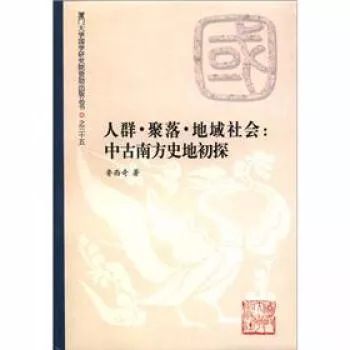
[Introduction] For a long time, "the North Center Theory" or "the Central Plains Center Theory" has been the mainstream of China’s traditional historical narrative. However, the author believes that there has always been a "southern clue" in the history of China, which is obscure and invisible because of the deliberate neglect of orthodox historical view and the guiding interpretation of political discourse. As a part of diversified history, "Southern Clue" is a key to understand China civilization, interpret China road and judge China fortune. Without this key, our understanding of China, a very large-scale civilized country, will become one-sided and distorted. The author points out that it is necessary to sublate the southern narrative based on the "north-centered theory" or "central plains-centered theory" in the past, and it is particularly important to return the "southern clue" of China history to its original appearance from the standpoint of southern subjectivity. The article originally contained the book "People, Settlements and Regions: A Preliminary Study of the History and Geography of the Middle Ages South" written by Professor Rusic, and was transferred from "Reading with Writing", which only represents the author’s point of view, and is hereby compiled for your consideration.

The southern context of China’s history

▍ Query on the narrative of China’s ancient history with the history of the northern Central Plains as the main clue.

Generally speaking, the traditional exposition of China’s ancient history is mainly based on the historical development of the northern Central Plains, and can even be expressed as a "north-centered theory" or "Central Plains-centered theory". In the interpretation system of China’s ancient history with "dynasty change" as the main narrative clue, the historical development of the southern region is mainly described as the expansion and conquest of the Central Plains by force, and the economic development of the southern region is brought about by the migration of the northern population to the south; Then, the implementation of China-Korea system in the southern region: establishing a powerful bureaucratic system (and various institutional settings attached to the bureaucratic system, such as the system of selecting officials and the legal system, etc.), implementing effective administrative control over the southern region, and bringing the people in these areas into the household registration and taxation system of the dynasty countries; Further, the so-called "enlightenment" was carried out. The dynasty countries promoted the so-called "kingization" through various means or channels, such as the education system, the election system, and the means of reward, recognition and punishment, that is, instilling orthodox ideology into the southern region, "turning barbarians into Chinese" or "turning barbarians into summer", and finally completing the "cultural transformation" of the southern region, that is, the so-called "standardization" of China culture or

For more than half a century, China historians have criticized this historical narrative and interpretation centered on the history of the Central Plains from two aspects: one is the polycentric or pluralistic theory of the origin of China civilization. After years of exploration and efforts by several generations of archaeological and ancient history researchers such as Su Bingqi, Zhang Guangzhi and Shi Xingbang, the monocentric theory that the middle and lower reaches of the Yellow River (Central Plains) are the origin of Chinese civilization has been abandoned, and the polycentric theory or pluralism of the origin of China civilization has been widely recognized. Archaeologists and ancient historians have generally agreed that there are at least a few clues about the early civilization of China between 6000 and 4500 years ago:

(1) Yangshao culture-Longshan culture in the Central Plains, with the so-called "Huaxia Group" as the main body (early and middle period); (2) The Dawenkou culture-Shandong Longshan culture with the so-called "Dongyi Group" as the main body from the south of Shandong Peninsula to the Jianghuai area; (3) Majiabang culture-Songze culture-Liangzhu culture with Dongyi Group as the main body in the area around Taihu Lake in the south of the Yangtze River; (4) Daxi culture-Qujialing culture-Shijiahe culture with the so-called "Miao Man Group" as the main body in the middle reaches of the Yangtze River; (5) The northern part of Yanbei and the western part of Liaoning are likely to be Hongshan Culture-post-Hongshan Culture (Xiaoheyan culture) or Xiajiadian culture with the "Huangdi Group" as the main body; (6) South-central Inner Mongolia may also belong to the so-called "Huangdi Group" as the main body of the pre-Yangshao-marine culture-Longshan culture; (7) Xianrendong-Zhucheng-Wucheng culture and Xiqiao Mountain (Linglongyan) culture-Shixia culture in the southern region with Poyang Lake and Pearl River Delta as the main axis; (8) Sanxingdui culture in Bashu area-Twelve Bridges culture.

Although archaeologists and ancient history researchers have many different understandings of the division of these cultural flora and their interrelationships, internal divisions and types, in general, they think that the early civilization in China is composed of different origins, with multiple centers and diverse characteristics, which are mutually integrated, and gradually form a "core" from "diversity".

This kind of reasoning has fundamentally changed the interpretation mode of "dissemination and diffusion" in the study of the history of the origin of civilization, thus bringing a fundamental impact or negation to the so-called "Central Plains culture going south" (and spreading around) ancient history interpretation system.

The second aspect of the overall criticism of the historical narrative and interpretation centered on the history of the Central Plains comes from the research methods and approaches of the South China School on the construction of local society or historical anthropology centered on the southeast coastal areas (focusing on the research of the Pearl River Delta and Xijiang River Basin, Fujian Putian Plain, western Fujian Mountain and Taiwan Province area).

One of the starting points of the study of South China is to try to get rid of the interpretation mode that the dynasty expanded from the central plains to the surrounding areas (including the southern regions) through military expansion, political control and enlightenment, and finally established a unified Chinese empire, but to regard the Chinese empire as a cultural concept. The infiltration of the metaphor of imperial authority into the southern frontier society was not implemented by issuing decrees from top to bottom, but by the local people upgrading their own motivation from bottom to top. They adopted propositions from the political center in a certain historical period, and in the process of building local society, they used these propositions as the language of national order.

In other words, the history of immigration, education, development and cultural communication is not only the history of civilization expansion, but also the expression language of establishing national order based on the power of local society. In this way, in the process of entering the political, economic, social and cultural system of the Chinese Empire, different places have actually gone through different paths and have different connotations. In the words of Mr. David and Mr. Liu Zhiwei, it is: "Under the concept of great unity, there can be great differences in implementing the same system in different time and space. The reason is simple: Ming and Qing empires all have huge regions and populations, and the geographical environment and customs of the eastern, southern, western and northern parts are very different; Different regions also play different roles in the empire; More importantly, even if different regions have experienced a common dynasty history, they have their own local historical processes with very different contents. " Obviously, the charm of South China studies is to show the diversity of historical development and local social construction in the late Chinese Empire.

Comparatively speaking, the study of China’s medieval history is mainly about the history of the Han, Wei, Jin, Southern and Northern Dynasties, Sui, Tang, Song and Yuan Dynasties. Although it also shows some diversified tendencies, generally speaking, it is still based on the historical development of the Central Plains, especially the history of the rise and fall of dynasties. Although great progress has been made in the study of the history of the southern region in the Six Dynasties, the Nine Kingdoms in the Middle and Late Tang Dynasty and the Southern Song Dynasty, we have carefully considered the overall orientation of historical narrative and interpretation in the above three periods, and we can find that:

The relevant research is still mainly focused on its significance to the development of the southern region, emphasizing that the economy and society of the southern region have made great progress during this period, so it can be expressed as "the history of the southern region under the history of the dynasty"; Not on its significance to the historical development of China, but on its significance in the history of China, so it is not "the history of China in the southern region". More importantly, the interpretation and research on the history of the Han Dynasty, the Sui and Tang Dynasties and even the Northern Song Dynasty are basically based on the history of the Central Plains dynasty, and the history of the southern region is basically regarded as a subsidiary position. In fact, we don’t know much about the history of the southern region in this long period, and the proportion in the existing historical narrative and interpretation system of China is also quite light.
There are two important joints:

First, the unified Sui and Tang Dynasties inherited the southern region and the northern Central Plains region, which are actually two historical traditions: the former is the southern tradition since the Six Dynasties, while the latter is the northern tradition mainly formed in the Northern Wei Dynasty, the Eastern and Western Wei Dynasties, the Northern Zhou Dynasty and the Northern Qi Dynasty. As far as the land system, village system and corvee system are concerned, the existing research has fully revealed that the Wei, Jin and Northern Dynasties are a system of the same strain, and its evolution clues are clear. The Six Dynasties, especially the Eastern Jin and Southern Dynasties, is another system, which was different from the Central Plains in the Han Dynasty. During the evolution of the Six Dynasties, the gap with the Central Plains in the north became larger and larger. Then, after the reunification of Sui and Tang Dynasties, how did these two historical traditions gradually merge?

There is a debate about whether there is a so-called "southern dynasty". However, the focus of this debate is on the institutional origin of the unified dynasty in Sui and Tang dynasties, and it has not touched on the issue of how to implement and implement the unified dynasty system in various places. Specifically, the process of the unification of Sui and Tang Dynasties was actually manifested in the conquest of the southern regime by the northern Central Plains Dynasty. Therefore, in terms of system implementation, it was mainly manifested in the establishment of various systems based on the northern Central Plains, such as the Lifang system with closed space as the main feature, the land equalization system with limited land as the core, the household registration system which was far stricter than that of the Eastern Jin Dynasty and the Southern Dynasties, and the mature government and soldiers system during the Western Wei Dynasty and so on. How were they promoted and implemented in the southern region?

In other words, after the unification of Sui and Tang Dynasties, how did these systems, which were mainly formed and evolved step by step in the history of the Northern Dynasties, absorb and how many "southern traditions" since the Six Dynasties? Are the various systems formed after the integration of the northern and southern traditions (mainly the northern tradition) widely implemented in the southern region? If the answer is yes, how are they implemented? For example, in the hilly and mountainous areas scattered in the south, how does the village system with household registration control as the core operate? In the upper and middle reaches of the Yangtze River and the Fujian area in Lingnan, where there are a lot of wasteland, how is the land equalization system aimed at limiting land implemented? How did most of the southern cities, which inherited the city walls and forms since the Six Dynasties, establish the regular Li Fang like Chang ‘an, Luoyang, Pingcheng and Taiyuan? And if our answer is no, then what is the situation? How did the dynasty countries realize their rule in the southern region (of course not the whole southern region)?

The second joint is the southern region inherited after the unification of the Northern Song Dynasty, and actually there are two historical traditions with the northern region as its foundation: Zhao and Song Dynasties were born out of Hebei, Hedong Fanzhen and the Five Dynasties regime in the late Tang Dynasty, and made no difference to each other (Mr. Mao Hanguang had a detailed discussion). What it directly continued was the northern tradition with Hebei and Hedong Fanzhen as its core, which Mr. Chen Yinke called "Hu"

After the Middle Tang Dynasty, the southern region actually embarked on a different or very different road from the northern region: to a great extent, the former and later Shu, Yangwu-Nantang, Qian wuyue and even Machu, Nanhan and Jingnan all continued to move forward on the basis of Li Tang, and inherited the Tang system. Of course, there were many complicated and diverse changes, but its foundation was the Tang system, so there should be no doubt. Then, after the reunification of the Northern Song Dynasty, whether and how did this southern tradition integrate into the unified system of the Northern Song Dynasty? Scholars who study the history of the Song Dynasty used to call it "the system of the Song Dynasty along the Tang Dynasty". So, where did the Song Dynasty inherit the system of the Tang Dynasty? What Tang systems were inherited and developed? To what extent does the reformed system evolved from the Tang system reflect the specific needs of the southern region? How is it implemented everywhere?

The same problem actually existed in the Yuan Dynasty. As we know, the southern region inherited by the Yuan Dynasty is the tradition of the Southern Song Dynasty, which is quite different from the northern tradition that evolved around Yanjing since the Liao and Jin Dynasties. The tradition of the Southern Song Dynasty, at least, was passed down to the Ming Dynasty, which became an important resource for the Hongwu Dynasty to construct a unified system. On this issue, according to Mr. Li Zhian and Mr. Zheng Zhenman in recent years, they all have some in-depth and interesting thoughts from different angles, which are worthy of attention. Therefore, the southern history of Ming and Qing dynasties should be in line with the tradition since the Southern Song Dynasty.

If we carry out in-depth thinking and research on the above issues, we may be able to trace the "southern context in China history" (not the development clue of southern history); Perhaps, sorting out the "southern context" will help us to understand the historical development of China. This is one of the starting points of my thinking about the ancient history of China in recent years.

▍ A preliminary analysis of the records of medieval historical documents in southern China.

In order to reconstruct the narrative and interpretation system of southern history and comprehensively think about the southern context of China’s historical development, the first step should be to comprehensively sort out and analyze the historical documents, archaeological materials and oral materials obtained from field investigation, so as to clarify their values and limitations.

Before 2003, like most researchers, I believed in the social, economic, cultural and even environmental records of the South in traditional literature, so as to study problems. For example, the descriptions of "the land of Chu and Yue" in Biography of Historical Records and Geography of Han Dynasty were used as the basic materials to understand the situation in the South during the Han Dynasty. Later, it was slowly discovered that there was something wrong here: these documents were basically written by northern scholars, with a strong Chinese color or the concept of central plains, and their descriptions of southern people, economy, society and culture could only reflect their understanding, rather than the objective actual situation. The initial suspicion came from the different descriptions of Jinghu Road (Jingxi Road and Jinghu Road) in Song and Yuan Dynasties: in the Southern Song Dynasty, such as Lu You, Wang Shipeng and Lu Jiuyuan, Jingxi Road and Jinghu Road were desolate and very backward; After forty years of war in Song and Meng Dynasties, under the pen of northern scholars in Mongolia and Yuan Dynasties, the Jinghu area turned out to be very rich. This sharp contrast made me start to think about who left these records: of course, the scholars of the Southern Song Dynasty, mainly from the East-West and Zhejiang roads in the south of the Yangtze River, despised Jinghu Road, while some authors from the north and even the Western Regions and Mongolia obviously lamented the richness of these areas.

Starting from this, I began to systematically ponder the sources, types and values of historical documents recorded in the southern region of the Middle Ages. After several years of exploration, I now preliminarily divide these documents (materials) into the following categories in terms of their sources:

The first is the narration and writing of Chinese scholars (Central Plains scholars).

It is believed that at least before the Northern Song Dynasty (including the Northern Song Dynasty), most of the main written materials about the historical records of the South belonged to this part. Its core part is the southern historical materials found in official history books and chronological history books, which is the basic basis traditionally used to construct the clues of southern historical development. Now, we know that this part of the material mainly reflects the Chinese scholars’ understanding of the social, economic and cultural conditions in the south of their time, and it is the narrative and interpretation of the history of the south by the "other" (external observers).

We need to carefully analyze the records and interpretations of these documents to see which of them may reflect some realities of southern history, or adopt the interpretation of the southern society itself, and which parts are just the subjective imagination or understanding of the "other" ("external" observers) and their times. We should start with the southern images in Chunqiu Zuozhuan and Guoyu, and then investigate the "historical sources" of southern historical records in official history such as Shiji and Hanshu-what are their sources. The History of the Three Kingdoms and the Four History of the Southern Dynasties include many southern factors, but the credibility still comes from the hands of scholars who have or hold the view of Huaxia. The Book of Jin, Sui Shu, History of the South and History of the North, which were compiled in the early Tang Dynasty, are typical examples of reinterpreting the history of the South under the unified situation. The old and new Tang Shu and the History of the Five Dynasties compiled in the Five Dynasties and the Northern Song Dynasty are similar to this. Not to mention the history of Song, Yuan and Ming. These official histories have constructed the basic framework for the narrative and interpretation of southern history by traditional historiography. We should "deconstruct" this narrative tradition from here now, and point out that all this is just the understanding and narration of the southern history under the orthodoxy of the dynasty and the central view of the Central Plains, and it is not the "own" history of the south, so it cannot better explain the significance of the historical development of the southern region in the historical development of China.

Second, the narrative and writing of southern scholars based on the "South".

I’m not sure how to define "Southern Scholars" and how to base on "South". I only have a vague idea. Of course, birth and growth environment are the first consideration, but the key lies in whether its narrative and interpretation hold a position of "sympathy" with the southern society (in the same situation) Scholars in the south are based on the narration and writing in the south, and this tradition can at least be traced back to Qu Yuan and Chu Ci. I thought that the narration in the south had a considerable influence in the early Han Dynasty (before Emperor Wu), and the emphasis on Zhang Chu in The Moon Table at the Time of Qin Chu in Historical Records may be due to this, while Sima Qian’s narration about Wu, Chu and Yue may also be mainly derived from the narrative tradition of the south, which was tailored. Huayang Guozhi, Yuejueshu, and the geography and landscape travel notes of the Six Dynasties all deserve careful analysis. These works of the Six Dynasties show the efforts of southern scholars to make their own narrative and interpretation of their own local history. Unfortunately, this kind of effort was neither persistent nor short-lived, and was soon overwhelmed.

Most southern scholars in the late Tang and Five Dynasties yearned for the Central Plains and the Tang Dynasty (or pretended to be the real Tang Dynasty), so there were few writings based on the south. However, wuyue of Qian’s family and Shu of Meng’s family (even Fujian of Wang’s family) are all interested in their own "cultural construction", so they also left some records based on the south, which need to be analyzed. The narrative and writing tradition of southern scholars in the Northern Song Dynasty is basically based on the Central Plains or China. During the Southern Song Dynasty, even in the Yuan Dynasty, the focus of scholar-officials shifted to "local" (Han Mingshi revealed the situation of this shift in the Southern Song Dynasty, and I thought this shift was basically completed in the Yuan Dynasty), which prompted them to base themselves more on the South and describe and write the history of the South.

During the Ming and Qing Dynasties, the narration and writing of southern scholars presented a complex and diverse situation: on the one hand, a considerable number of narration and writing traditions, which may occupy the mainstream position, were still based on the position of the Central Plains or China, and through these narratives and explanations, the history and culture of the South were successfully incorporated into the historical and cultural system of China or China centered on the Central Plains; On the other hand, the narrative and writing mainly based on the south, especially the specific local society, has gradually formed into a new tradition. Although this tradition is often covered under the topic of "the position and role of a certain place and its society in the history of China", it is actually based on the local area, aiming at emphasizing the characteristics and importance of the local area, and thus gradually building a historical view and historical knowledge system based on the local society.

Genealogy (although genealogy has always been defined as folk literature, in fact, it is still the scholars and their concepts that play a major role in the process of genealogy revision, so genealogy still belongs to the narrative tradition of scholars or literati) embodies these two seemingly contradictory narrative and interpretation directions: on the one hand, it should be upward, emphasizing its long history, so as to connect with "Central Plains", "Huaxia" and its culture; On the other hand, it should be downward, highlighting the dominant position and important influence of this race in local society. The research on genealogy has fully revealed this point.

The third is the narration and interpretation of the "people" in the south.

Here, it mainly refers to the literature materials other than the narration and writing of scholars, mainly including religious documents such as contracts (positive contracts and hidden contracts), scientific instruments, religious materials such as statues and monuments, folk historical legends and stories, some materials in genealogy, and non-written materials such as statues and pictures.

I think these are the real "folk documents". They are documents that people need and use. Such as contracts, most of them are not written by scholar-officials (even if they are written by scholar-officials, they are not written as "scholar-officials"), and the bookkeepers (calligraphers and signers) are not scholar-officials, but the people understand the meaning and significance of these contracts (the process of "selling wine" and reading aloud in the process of book signing enable both parties and related parties to understand their meaning) and widely adopt this form. These words or images reflect people’s narratives and ideas about their own history. For example, the stipulation of "never forgive" in the contract of Tang and Song Dynasties, and the existence and expression of a large number of white deeds in the contract of Ming and Qing Dynasties all imply the people’s indifference to the power of the dynasty or the state to varying degrees, indicating that there has always been some kind of system outside the power of the dynasty. I believe that by combing these words and images, we can get a glimpse of some realities of people’s lives in southern China and build a historical understanding based on the people (or the people).

Sorting out and discriminating the above-mentioned records, reflecting the clues of the historical development of the South and the literature materials at several levels, and analyzing: (1) Who wrote it and how did he know it? That is, the analysis of historiography; (2) Why did he write like this? Instead of writing it like that? How did he integrate those divergent data, and what considerations were there between the choices? The main method is to analyze the differences between different records and the reasons for this difference. I call this "analysis of history writing"; (3) What did he write these for? That is, why did he write these? That is, the analysis of writing purpose and intention. Only by understanding these problems can we use these materials freely and then discuss the historical development of the southern region. At the same time, through these works, we can also establish a characteristic "historical philology".

▍ The starting point of research and the development of research work (ideas and ideas)

On the basis of the above preliminary thoughts (in fact, these thoughts were gradually formed in the following research process), I began to try to carry out some special research work. Because my work foundation and data accumulation are mainly in the middle reaches of the Yangtze River, especially in the Hanshui River Basin, the relevant special research naturally begins in the middle reaches of the Yangtze River. In the past five years of thinking and research, some ideas have gradually formed, most of which have not yet been implemented, just some ideas and research ideas.

(1) the origin, ethnic division and essence of the residents (or population) in the south

One of the core clues about the historical development of the southern region in the traditional China historical interpretation system is that the northern population moved southward and the resulting changes in the composition and distribution of the southern population, while the economic development, social development and even the establishment of political control order in the southern region were all realized with the northern population moving southward. Therefore, if we want to rebuild the cognitive and explanatory system of southern history, we must re-understand this system.

After several years of thinking and preliminary discussion, I think that the above-mentioned argument system is at least incomplete, or there is deviation in the direction, and I have initially formed some rough views: the main part of the resident population in the southern region (generally speaking) is gradually developed from the indigenous population in the southern region; Northern immigrants and their descendants, although the proportion in southern regions is not the same, generally speaking, do not account for the majority of the total population (in all periods); In the traditional interpretation system, it is probably wrong to say that most of the population in the south can be traced back to the Central Plains in the north.

Therefore, the first step we need to do is to distinguish the historical truth and "cultural creation" of "the population of the south comes from the north". Therefore, it is necessary to re-examine the influence of several large-scale migration movements of northern population to the south in the history of China on the population composition and distribution in the south, and make an overall assessment. In particular, the three migration movements (after Yongjia Rebellion, Anshi Rebellion and Jingkang Rebellion) that have long been regarded as changing the population composition in the south and triggering the so-called wave of development in the south and their influences are the key to the problem. It can be believed that these three migration movements have increased the population in the southern region, but compared with the indigenous hukou in the southern region, the northern immigrants and their descendants may not have absolute advantages (this requires careful literature research and data analysis). The basic composition of household registration in the southern region is still the indigenous people in the south.

Scholars in South China’s research on the clans in Guangdong and Fujian, especially the interpretation of genealogy by Mr. Liu Zhiwei and Mr. Zheng Zhenman, have quite fully proved that most of the legends or records about their ancestors from the Central Plains in Guangdong and Fujian are just a kind of "cultural construction", and this "historical memory" is just a means to transform themselves into members with "legal" status in the imperial order. Therefore, the path of using genealogical data to study immigration history has to be reconsidered.

The second step is to further identify: (1) who are these indigenous people in the south-what are their characteristics; (2) How are they defined, and how do they define themselves? (3) How are these southern aborigines gradually considered (as they themselves think) to be "from the Central Plains", that is, how is the "Southern residents originated from the Central Plains" established, and what is the essence of this statement. Of course, these problems need to be investigated in different periods. It involves some important issues in the history of "ethnic groups" in the south, such as the origin and evolution of Yue, Man, Ba, Liao and Yi, and the nature of ethnic groups. Our general tendency is to think that these ethnic groups or ethnic groups in the south in history can basically be regarded as "ethnic names" added by Chinese scholars from the outside on the indigenous people in the south, rather than their own definitions. Therefore, it is not their own definition. With a considerable part of them, they were gradually incorporated into the edition system of the dynasty countries, accepted the words and culture representing "Chinese civilization", and gradually moved from "externalization" to "internalization", and then divorced from their indigenous background and rewritten as "Chinese immigrants from the Central Plains" (they themselves, especially their elites and literati, played a vital role in this rewriting process).

By understanding the above two points, we can reinterpret the population development, distribution and ethnic nature in southern China. The standpoint of discussing this issue should be anthropological, not ethnological. Only by putting our discussion on the background of the composition of the population (immigrants and aborigines) can we avoid many controversial issues such as the so-called national definition and division, and focus on: Who is the main body of the historical development of the South? Northern immigrants suppress southern natives?

(B) the southern types of ancient institutions and the southern road of institutional evolution.

Another core clue of the traditional China historical interpretation system about the historical development of the southern region is that the dynasty countries gradually established the political, economic and cultural systems of the dynasty in the southern region through various means and channels, and through these systems and their operation, the southern regions were steadily and firmly brought into the control system of the dynasty countries. "Institution" has always been the core of the study of China’s ancient history, and it is also regarded as the most important way for the dynasty countries to control the southern region (and other regions).

There are two prerequisites for this explanation: (1) the centralization of absolutism is powerful and has enough power to implement its system in various regions; (2) Because of the first point, the implementation and operation of the "system" in various places are at least relatively uniform or consistent. However, the existing research has questioned these two premises. Therefore, we are thinking: is it possible to form a "southern type" (or more local types) according to local conditions in the process of implementing various institutional designs of dynasty countries in the southern region? And does the evolution of this system show some kind of "southern road"? On this issue, my current thinking focuses on the following four aspects:

(1) My thinking starts from the village system.

We know that the village system, which gradually sprouted in the Spring and Autumn Period and the Warring States Period, and was established in the Qin and Han Dynasties, especially in the Han Dynasty, was actually based on the villages in the northern region. Unearthed documents such as Juyan Han Bamboo Slips revealed that all the residents lived in a "village" surrounded by earth walls or fences, thus forming a relatively uniform living style and village system. The bamboo slips of Han and Three Kingdoms published in Jiangling, Changsha, Jiangdu and other places in the south show that there are no such concentrated settlements in the south, but scattered in small-scale scattered villages, and even many natural villages have only two or three households or even one household, and there is no evidence that there will be soil walls around such natural villages!

Obviously, in the scattered state, the implementation of the village system of "100 households as the interior" can only adopt flexible methods: giving priority to the region, dividing the land as the interior, and integrating the interior into the township, that is, the village system is manifested as "regional organization", and its foundation is the region, not the village. This is the variation between the village system in the south and the village system in the north (the standard system determined by the dynasty countries) in the implementation process, and this variation has a great influence on the later evolution because it happened at the source.

(2) The second starting point of my thinking is the cities in the south and the systems inside and outside the cities.

As we know, the city is a symbol of the power of the dynasty, so it requires the shape and structure of the city (the city under its jurisdiction, the same below) to follow the requirements of the so-called "ritual system" as much as possible. Many experts who study the architectural history of China emphasize the observance of Kao Gong Ji in the construction of ancient cities. In the north, we have also seen a large number of square ancient city walls that meet the requirements of the system. During the Ming and Qing Dynasties, the municipalities in the southern region also tried to abide by these regulations, but they did not do well enough, and they still showed some tendency of being impolite. Most importantly, they seemed to be more inclined to abide by the requirements of topography, actual needs and "Feng Shui". Topography, actual needs and the southern city shape under the principle of Feng Shui, and the northern city under the principle of etiquette show two directions of ancient city shape-of course, what we see now is more likely the result of the joint action of these two directions. In the same way, I tried to see how the Lifang system in the Sui and Tang Dynasties was implemented in the cities in the southern region.

In the article "Lifang System and Its Form in Local Cities in Tang Dynasty", I argued that in the early and middle period of Tang Dynasty, except for a few cities under the jurisdiction of prefectures and counties with newly built or completely rebuilt battlements, most local cities did not have closed Lifang surrounded by square walls or fences; In the city of Luocheng, the state capital that continues to use the old city wall, and in the city where the city wall has not been established, there are also Li and Fang belonging to the urban and rural grass-roots administrative organization system. After the "An Shi Rebellion", the Lifang system was widely implemented as most cities and some county towns were generally built or expanded. These Li Fang are mainly grass-roots administrative units organized for the purpose of household registration control, tax collection and public security, and their form is a block centered on streets and lanes and spread to both sides. At the same time, there are markets in the suburbs of many cities, which further shows that even in the early and middle Tang Dynasty, urban commercial activities were not completely confined to the closed "market square".

In other words, when the Lifang system was established in the Sui Dynasty and the early Tang Dynasty, most cities in the southern region followed the pattern since the Six Dynasties, and there was no Lifang system at all. However, after the mid-Tang Dynasty, the southern government officials generally carried out the Tang system including the Lifang system in the southern region, especially in the cities where Jiezhen was stationed. This explanation is quite different from the explanation of Lifang system (or Fangshi system) since Kato Fanfan, which further affects how we understand the direction of urban development in Song Dynasty.

(3) The third aspect I think about is the establishment and division of administrative regions in southern China.

It is generally believed that administrative division is a regional and hierarchical administrative system under the unified centralized state, and it is the division and stratification of the areas ruled by the centralized central government from top to bottom, that is, the so-called "national economy". In fact, the formation and division of administrative districts is a more complicated process, which is often not due to the system design of the central government, but the result of a series of political, economic, military and even personnel factors. Local political changes, regional political patterns, local political forces, economic ups and downs, military actions, strategies and other factors will have a great impact on the formation and changes of local administrative districts.

For example, the establishment of Xunyang County in the first year of Yongxing in the Western Jin Dynasty (304) was one of the measures taken to further strengthen the control of the middle reaches of the Yangtze River after the Zhangchang Uprising was settled; In the first year of Yongjia (307), the expansion of Xunyang County’s territory and the increase of counties were probably related to Huayi’s efforts to win over local forces in Xunyang. During Yongjia’s two to five years, Xunyang County moved to the south, which was probably due to Huayi’s conservative Jiangzhou and shrinking the defense line. By the end of the Eastern Jin Dynasty, the merger of Xunyang and Shangjia provinces and the reduction of Songzi and Hongnong counties to Xunyang counties were part of the rectification measures of Liu Yujing and Jiang, mainly to weaken the strength of Jing and Jiang counties. The "Shannan Road" in the early Tang Dynasty was not defined by the courtiers according to the map and the "shape of mountains and rivers" at that time, but the inheritance and development of the ever-changing geographical concept and political geographical pattern since the Western Wei and Northern Zhou Dynasties and even the Jin and Northern Wei Dynasties, which actually had its specific political, military and even economic and cultural basis. In other words, the division of the ten roads in Zhenguan and the determination of their geographical scope can be explained not only by the word "mountains and rivers form convenience", but also by its profound historical, political and geographical background. Such as Henan and Hebei roads, are obviously closely related to the political and geographical pattern and its changes since the Northern Wei, Eastern Wei and Northern Qi Dynasties. Therefore, if we want to explore the origin of the "Ten Ways of Zhenguan" in the early Tang Dynasty and the principle of its division, we must combine the changes in geographical concepts and political geographical patterns since the Jin and Wei Dynasties to understand it.

(4) The fourth aspect I think about is the implementation of the service law.

Shuowen says, "We should serve and defend the border. Ancient prose works from people. " "Fu, convergence also," "rent, land tax also". It is the king’s law to make up families and people to pay for service. In the study of the history of China’s tax service system, Fu has been paid more attention to, and its evolution is also roughly clear; However, the research on service is relatively weak, and many joints are not quite understood. At first, I paid attention to the difference of the service law between the north and the south. I read the section of "Food and Water Conservancy" in Song Dynasty, and noticed that the service of river engineering in the northern part of the Northern Song Dynasty was very heavy, while it was basically absent in the south (south of Huaihe River). Later, I systematically read the research of Mr. Zhang Zexian, Mr. Zheng Xuemeng and Mr. Wang Yuquan, that is, I was quite concerned about the differences in the implementation of the service law in different times. However, this field is very difficult, and I haven’t been able to enter it yet. I just have some immature ideas, which may be the most laborious part in the future research.

Military service and compulsory service are the core parts of the corvee system in the Middle Ages, and they are also the most burdensome services for compiling families and people. I tried to discuss the similarities and differences between military service in the northern and southern dynasties from the perspective of military service, but I haven’t figured it out yet.

Generally speaking, the Northern Dynasties gradually developed from the tribal military system to the government military system, and the army and the people were basically separated. Therefore, although the Han people were frequently recruited as soldiers, for example, when Emperor Xiaowen of the Northern Wei Dynasty went south, the people of the prefectures and counties were sent, and "one out of every ten people was charged", but before the reform of the government military system by Emperor Wu of Zhou, the military service burden of Han farmers was generally not very heavy. However, the Southern Dynasties were quite different. Since Sun Wu, people were frequently recruited as soldiers. By the Eastern Jin Dynasty and the Southern Dynasties, the so-called "three-to-five selection system" was formed. For example, in the 27th year of Yuan Jia in Liu Song Dynasty (450), he "sent three or five people to Yanzhou in the south"; "In the fifth year of Daming (461), three or five ding were issued". The so-called three-five-ding system means that five ding takes three. The military service of the Han people was more important than that of the Northern Dynasties. And the service period is very long. Bao Zhao’s poem says: "Young people leave home, but poor people are still getting started"; "I went to my hometown for 30 years, and I got back to my old hill." This is the north and south systems of military service. The Northern Zhou Dynasty and Sui Dynasty unified the south and gradually extended the government military system to the south. However, there were few government houses in the south, and most of them were beyond the Yangtze River, so the burden of military service in the south was greatly reduced. Therefore, after the reunification of the Sui and Tang Dynasties, the law of military service in the north was promoted to the south.

In the article "Fang Yu Haozu in Shannan in the Western Wei and Northern Zhou Dynasties", I tried to explain how the government soldier system was promoted to Shannan with the conquest of the Western Wei and Northern Zhou Dynasties on the basis of Mao Hanguang’s research.

If the military service in the southern region in the Middle Ages was relatively light, the transportation service was relatively heavy. During the Sui and Tang Dynasties, a large amount of grain was transported northward every year to the south of Jianghuai, resulting in "the left side of the river was trapped and lost", and "the water was dragged by the land, and the spring was endless, and people were forced to seize agriculture. What do you expect when you die? Kanto resented." After the Anshi Rebellion, the Tang Dynasty paid tribute to the southeast wealth, saying, "Recruit teachers from all directions, turn to pay thousands of miles, pay for cars and horses, and send them far and near, and all the people will work hard [hard] (stop)." Or face each other repeatedly in one day, or don’t understand the armor for years, and the sacrifice is lacking, and the family is in vain. Life and death are displaced, and grievances are condensed. The labor is endless, and the land is barren. Life is harsh and demanding, and fatigue is empty. Turn to the ravine, leave the township, and the hills in the city are cut off. " This is the situation of Dezong dynasty in Shannan, Huainan and Jiangnan. This shows the importance of the transportation service in the south.

In a word, the important system designs in ancient China, such as the village system, the city lane system, and the tax service system, were mainly based on the northern region, and were generally adapted to the geography, economic production mode and social conditions in the northern region. Therefore, when these systems were implemented in the southern region, they must be modified, so the "southern type of system" was produced; Because at the beginning of implementation, it was not consistent with the system design and regulations, and in the later evolution process, more and more southern characteristics were formed, thus developing the "southern road of institutional evolution." The southern types of these systems and their evolution of the southern road, in turn, affected the system design itself, which became more and more important later, making the ancient system gradually "southward."

(3) Folk beliefs and rituals in southern China

Since 2003, I have devoted a large part of my time and energy to the study of land purchase vouchers. I have studied these land purchase vouchers for three reasons:

First, it is a real folk document, which is written by people who are not very literate or completely illiterate. Most of the writers are geographers, Mr. Yin and Yang, monks and Taoist priests, not scholars.

Second, people in this world, whether rich or poor, will die. Therefore, how to treat and deal with death is a major event in life. By buying land coupons, we can get a glimpse of how ancient people viewed and how to deal with the problem of death.

Third, the source of land purchase vouchers is the land-telling policy made by Chu in the late Warring States and the Western Han Dynasty. Therefore, I tend to regard it as the early tradition of dealing with death in some parts of the south (the middle and lower reaches of the Yangtze River or the whole Yangtze River basin). According to the materials of the Han, Wei and Six Dynasties, Wu Yijun and Andu Wang may be the earlier ghost kings in the south, which may be another source of origin, different from Taishan Shenjun in the north. In other words, before Buddhism was introduced and became a popular belief, the idea of the underworld in the south was quite different from that in the north. From the Chu Dynasty to the Han Dynasty, it was a death treatment system that originated from the south, especially from Chu. Of course, in the Tang and Song Dynasties, this tradition affected all parts of the country, even the northwest (Dunhuang and Turpan materials), and this can be regarded as the expansion of southern folk beliefs, or the process in which northern beliefs were influenced by southern beliefs.

The second aspect is about the folk funeral ceremony. This problem is actually an extension of the previous one, because the study of land purchase vouchers only deals with written materials and is not a living history. Then, how to see through its ancient ritual tradition in contemporary anthropological observation? A few friends, mainly Professor Liu Yonghua, and I have been exploring this problem constantly. Yonghua’s interpretation of the text of the scientific instrument book has helped me a lot. However, the writing tradition can reach many people, no matter how big its application scope is; In a ceremony, participants are limited, but the degree of participation of participants is far more than reading or listening to the expression of words.

Therefore, the ceremony and its process can best show the locality. Since Wu Yashi, many scholars who have studied folk belief rituals have focused on observing the refraction or deposition of the state power system from the ceremony, which is of course an important aspect, but I think that many rituals are mainly made for local society and local people, so they need to be understood and recognized by the people, so it is "local". The locality of the ceremony may be one of the focuses of my anthropological view of ancient history. But I don’t know exactly how to do it.

(D) the diversity of people’s livelihood and the diversification of economic forms in the southern region.

In the traditional historical interpretation system of China, the general narrative mode of economic development is: population increase (labor force increase) → land increase (field increase) → productivity increase (mainly manifested in the promotion of iron farm tools and Niu Geng, the development of irrigation and water conservancy, and the latter is mainly manifested in the development of agricultural economy (the increase of total agricultural products) → the development of commodity exchange and commodity crop cultivation → the development of handicraft economy. This narrative and interpretation of the history of economic development is mainly in terms of simple farming areas, and it is not suitable for the northern region, especially the areas where farming and animal husbandry run concurrently.

As far as the southern region is concerned, people’s livelihood depends on two important aspects: mountain forest (mainly gathering, fruit tree planting and logging) and rivers, lakes and oceans (fishing and breeding), in addition to farming with rice as the core. Therefore, the "agricultural resources" in the southern region are different from those in the northern Central Plains, which rely on "land" relatively simply, so the structure of its agricultural economy is different from that in the northern region. In this way, it is the first step to study the structure of agricultural economy in southern China from the perspective of resources. The ownership of mountain forest and water surface may be an important starting point for studying this issue.

Because the agricultural economy does not simply rely on "fields" and the sources of livelihood are diversified, the exchange between different types of products is likely to become inevitable. I guess the frequency of exchange and trade in the southern region is higher than that in the northern region, and the degree of development of commodity economy may be higher than that in the northern region, especially later. In other words, the commercial tradition in the southern region is relatively developed than that in the northern region. In this way, the diversified economic forms in the southern region are formed: (1) farming economy dominated by rice farming, (2) forest economy dominated by fruit tree cultivation and forest logging, (3) fishery economy dominated by fishing and breeding, and (4) primitive commodity economy mainly characterized by product exchange. The diversity of land resources and their utilization forms is the basis of the diversity of economic forms. Diversified economic forms, or diversified ways of livelihood, make the life of southern residents relatively less scarce, so the economic development in the southern region is relatively stable, unlike the ups and downs in the northern region. This is an important reason why the social and economic development in the southern region is relatively stable and there is no major fracture.

Diversified economic forms, mainly rice farming and supplemented by fishing and hunting economy, have greatly influenced the social and economic life in southern China.

Biography of Historical Records of Huo Zhi says: "The land of Chu and Yue is vast and crowded, with rice and fish in soup, or ploughed with fire and water, and clams are harvested, not waiting for Jia." If the land is spared food, there will be no hunger, so it will drag out an ignoble existence, and there will be more poverty without accumulation. It is the south of the old river and Huaihe River. There are no people who are frozen and hungry, and there is no family of thousands of dollars. "

The records of southern counties in Hanshu Geography also confirmed Sima Qian’s description. For example, Ba, Shu and Guanghan, "the southern part of the country is yi, and the Qin Dynasty thought it was a county. The land is fertile, and there are rivers and rivers, and the bamboo trees in the mountains are spared from eating fruits." South Jia Dian, Bo Tong, west near Qiong, Yong Ma Luo Niu. People eat rice and fish, and they are worried about their deaths. They are not worried about vulgarity, but they are easy to be slutty and weak. " From the south to the two counties of Bo ‘er and Zhuya on Hainan Island, it is also known as "men’s farming, planting rice and hemp, and women’s silkworm weaving."

It describes a decentralized, self-sufficient and autonomous society in relatively equal, which is in sharp contrast with centralization and autocracy in the middle and lower reaches of the Yellow River. As far as the basic mode of production is concerned, rice farming needs clear fields and ridges, as well as irrigation and drainage facilities; Compared with dryland agriculture, rice farming needs higher technology and more careful management. Therefore, people engaged in rice farming tend to be more stable than farmers who grow dry land, and are easy to develop fine and skillful qualities, which is conducive to the development of some handicrafts with higher skills. Abundant aquatic products and mountain forest resources provide stable and reliable supplementary food. All these have promoted the formation of self-sufficient life style under rice farming.

At the same time, the early rice farming in the southern region was mainly carried out in the valley and the edge of the plain, so small-scale cooperation could be carried out, and the requirement for large-scale cooperation was not very strong, which made small-scale family production possible.

On the other hand, the dense river network in the plain lake area or the rugged roads in mountainous areas all urge farmers to live as close as possible to the cultivated land, and diaspora has become the dominant rural settlement form in the southern region. In a word, the economic pattern of rice-based agriculture largely determines the tendency of decentralization, self-sufficiency and even autonomy in the southern region.

The last aspect of this thinking should be "the southern origin of the development of traditional China thought", including (1) the "southernization" of Confucianism, (2) Buddhism and Buddhism in the southern region, and (3) the southern origin and evolution of Taoism, a local religion in China. These problems haven’t been considered yet, but in 2010, I wrote an article "Textual Research on the Inscriptions of Thousand Buddhas and Stone Pagodas in Wenzhou Longwan Guoan Temple in Song Dynasty", which is considered as the beginning of research in this field, and I can’t say what I have learned.

Most of the ideas mentioned here have not been put into practice, and they should be adjusted or even greatly changed in the future research. But in the next ten years, I will probably continue to explore along the direction and logic mentioned in this article, hoping to gradually form some mature and meaningful understandings.

This article was originally published by Professor Rusic, People, Settlements and Regions: A Preliminary Study on the History and Geography of Middle Ages South (Xiamen University Press, 2012), and was transferred from "Reading with Writing" with the original title of "The Southern Context of China History". Limited by space, the content is slightly revised. The picture comes from the internet. If there is any infringement, please contact to delete it. Personal sharing is welcome, please contact the copyright party for media reprinting.

Original title: "Rediscovering the South: Another Road Behind China’s Historical Doubt | Cultural Horizon"

Read the original text
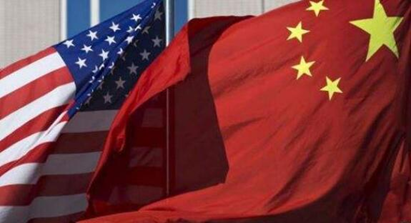
People’s leaders | for the youth

A far-sighted political party always pays more attention to the youth.

"The CPC Central Committee is very concerned about people’s livelihood. People’s livelihood is first and foremost employment. We are particularly concerned about the employment of college graduates." On June 8, 2022, the figure of the Supreme Leader General Secretary appeared in the Qiushi Hall of Yibin College.

The general secretary asked the teachers, students and business leaders who were attending the enterprise recruitment seminar to understand the recruitment needs of enterprises and the signing rate of graduates. He urged schools, enterprises and relevant departments to do a good job in the implementation of student employment contracts, "especially focusing on poverty-stricken families, low-income families, zero-employment families and disabled college graduates who have not been employed for a long time."

On June 8, 2022, General Secretary of the Supreme Leader waved to the teachers and students during his inspection in Yibin College.

On June 8, 2022, General Secretary of the Supreme Leader waved to the teachers and students during his inspection in Yibin College.

Aim for the future career, mostly for the youth.

"Young people are in the initial stage of life, and they often encounter various difficulties and distress in their study, work and life, and they need the help of the society in time." Since entering politics, the supreme leader has always been concerned about the thoughts, worries and hopes of young people.

When the supreme leader was working in Zhengding, he once went to Liucun Table Tennis Amateur Sports School for investigation, and learned that there was a young coach in the sports school who was excellent and responsible, and brought out students selected for the national team, but his salary was very low. The sports school hopes that the organization can help her solve some difficulties. At 11 o’clock in the morning, the supreme leader left the village with relevant materials. At 3 pm, the sports school was informed — — The county raised the young coach’s salary by one level. The first sentence written on the approval is "to encourage young people to study hard".

In the memories of youth of Huang Daoliang, a graduate of Minjiang Vocational College, there is also an unforgettable thing. Huang Daoliang lost his arms in an accident when he was young. Although his scores in the college entrance examination reached the big special line twice in a row, no school was willing to admit him. In 1990, Huang Daoliang took the college entrance examination for the third time. His father wrote a letter to Minjiang Vocational College about his children’s schooling experience. At that time, the supreme leader who was the secretary of Fuzhou Municipal Party Committee was also the president of Minjiang Vocational University. Under his care and coordination, Huang Daoliang realized his university dream and became the first college student without arms in Fujian.

Huang Daoliang's diploma.

Huang Daoliang’s diploma.

"We should pay attention to the thoughts, worries and expectations of young people, help them solve their worries and troubles in graduation job hunting, innovation and entrepreneurship, social integration, marriage and friendship, support for the elderly, children’s education, etc., and strive to create good development conditions for young people, so that they can feel that care is around and care is in sight."

General Secretary of the Supreme Leader said this and did the same. In his view, pressure is the driving force for the growth of young people, and giving a hand at the key point and when it is important may be an important fulcrum for young people to overcome pressure and develop into talents.

In today’s China, the pace of social development is very fast, and people’s work and life are also under great pressure. The general secretary is very considerate of young people and is committed to "creating a warm and harmonious social atmosphere, expanding inclusive and active innovation space, and creating convenient and comfortable living conditions, so that everyone can have a happy mood, make their lives brilliant and make their dreams come true".

Joining the team, joining the League and joining the Party is a "trilogy of life" for contemporary China youth to pursue political progress. From the perspective of ensuring that the red mountains and rivers will never change color, the General Secretary demands that the education chain of the party, the league and the team be connected and connected. He said that the Communist Party of China (CPC) has always opened its doors to young people and warmly welcomes them to become the fresh blood of the Party.

The General Secretary of the Supreme Leader has high hopes for the youth, advocates looking at the innovation and creation of the youth with appreciation and approval, actively supporting them to shine in life, and praising and applauding the achievements and achievements of the youth.

In June, 2021, the General Secretary walked into beijing aerospace control center and had a cordial conversation with the Shenzhou-12 astronaut who was on a business trip in space. At that time, there were many "post-80s" and "post-90s" aerospace scientists and technicians who provided technical support services for this "dialogue between heaven and earth", which made people see the vigorous strength of the younger generation. A few months later, at the Central Talent Work Conference, the General Secretary mentioned this detail. "Most of them are young people in their thirties and forties, but they are all responsible for important positions." The words are full of pride.

Young scientific and technological talents of beijing aerospace control center dispatching team shot on July 1st, 2022.

Young scientific and technological talents of beijing aerospace control center dispatching team shot on July 1st, 2022.

Mountains and rivers are the evidence, and years are the name.

In 2015, the General Secretary presided over the first Central Party group work conference in the history of the Party, which opened the curtain of deepening the reform of the Communist Youth League.

In 2017, the first youth development plan in the history of New China, which was personally directed by the General Secretary, was released, which made a strategic plan for youth development from the top design level.

… … … …

Socialism with Chinese characteristics has entered a new era, and the Supreme Leader General Secretary has always been based on the far-reaching consideration of "ensuring the party’s cause from generation to generation and ensuring the sustainable development of the Chinese nation", guiding the growth of youth and deploying youth work.

In the new era, young people in China have more equal educational opportunities, rich and diverse career choices, smooth development and free flow, and a wider stage to realize their brilliant life. Taking the education level as an example, the data show that in 2023, the consolidation rate of nine-year compulsory education reached 95.7%, the gross enrollment rate of high school reached 91.8%, the gross enrollment rate of higher education reached 60.2%, and the total number of students in school reached 47.6319 million, so more and more young people opened the door to success.

On June 26th, 2023, China Renmin University filmed the scene of the 2023 doctorate awarding ceremony.

On June 26th, 2023, China Renmin University filmed the scene of the 2023 doctorate awarding ceremony.

From the oath of "building a country with youth" to the self-confidence of "please rest assured that the powerful country has me" … … With the changing scene of the times, the young people in China in the new era meet the best period of the development of the Chinese nation, have a better development environment and a broader growth space, and are faced with a rare life opportunity to make contributions.

On the new journey, the Supreme Leader’s General Secretary is far-sighted. "We are determined to achieve a good result for the youth, and we also expect the younger generation to achieve better results in the future."

No.386 From Hair to White Hair, he illuminates the road of dreams for Shanliwa.

Cctv news "The cause of flowers is noble, and the cause of fruits is sweet. Let me do the cause of leaves, because the cause of leaves is ordinary and humble." This is Hugo’s words quoted by Cao Zhengyun, and it is also a portrayal of his 40-year teaching career.


In 1967, he came from Beijing to Pingshun to jump the queue, which made his home here. In 1976, he became a teacher in Pingshun Middle School. In 40 years, he gave up the opportunity to return to Beijing, stuck to this barren and simple land, and devoted all his youth to this beautiful county, from black-haired youth to white-haired old man, just for the dream of Yuanshanliwa flying out of the mountains.


At that time, how difficult it was for Shanliwa to enter the university! When sixty pairs of intense eyes stared at him from the audience, Cao Zhengyun clearly read that it was a desire to get out of the mountains, a trust entrusted by future and happiness. That year, the whole class he took got good grades: student Chen Chunxi missed Peking University by 2 points and was admitted to Beihang University. The number of students in the whole class who reached the second line doubled compared with the previous year.


In September 2004, Cao Zhengyun, who served as the office director and Chinese teacher of Pingshun Middle School for more than 20 years, retired from the middle-level leadership position. The school continues to arrange for him to take the place of senior three, and the workload is even greater than that of young people. Cao Zhengyun, who is over 60 years old, is as energetic as ever, and his spirit is even better than that of that year, just as he discussed with students and classmates more than 30 years ago. His students were admitted to Beijing University of Posts and Telecommunications, China Shiyou University, China Geo University, beijing university of chemical technology, University of Science and Technology Beijing, Yanshan University, Dalian Maritime University, Shanghai University of Traditional Chinese Medicine, Nanjing University of Science and Technology, Guangdong Ocean University and other famous universities.


For decades, how many students Cao Zhengyun has taught, he can’t remember. Far away from the other side of the ocean, among the doctoral students of Stanford University, a famous American institution of higher learning, there are his carefully cultivated seedlings, and the students he personally instructed at the vast Gobi Desert missile launch base are vigorous …


Cao Zhengyun has no grandiloquence. He knows that Smooth lacks talents and needs talents. Smooth and poor, the government has difficulties, and schools have difficulties. Sharing worries for the party and relieving difficulties for the people, Communist party member should do its part.


There have been several schools that paid a lot of money to poach him, and even relatives, "San Gu Cao Lu", advised him to quit, but Cao Zhengyun declined gracefully. In his view, no matter how high the remuneration and thick the treatment are, they can’t compare with the sincere and simple greetings from all directions on Teacher’s Day.


Not moved by poverty or wealth, Cao Zhengyun stuck to a teacher’s pure initial heart for 40 years, burning himself and illuminating Shanliwa’s dream road. What he shows is the dedication and loftiness of a real teacher. Let’s say to him sincerely: Thank you!